


Request a Demo
Join a 30 minute demo with a Cloudian expert.
Private cloud storage offers dedicated resources for enhanced security, control, and performance, ideal for sensitive data and regulatory compliance. Solutions range from building your own file server to using platforms like Cloudian, HPE or Rackspace, which deploy private or hybrid cloud infrastructure for specialized needs, such as full-stack applications or integrated hybrid environments.
Features to look for in a private cloud storage solution include:
Considerations for choosing a solution include:
Private cloud storage bridges the gap between traditional network-attached storage (NAS) and public cloud solutions, offering cloud-like capabilities (scalability, S3 API compatibility, multi-tenancy) while keeping data on-premises or in private infrastructure..
In this article:
Encryption is foundational to private cloud storage, protecting data at rest and in transit. Organizations can enforce encryption using industry standards such as AES-256 for storage media and TLS/SSL for network communication. With private cloud solutions, storage administrators have more latitude to select and configure encryption keys, integrate with key management systems, and comply with industry guidelines or corporate mandates.
Administrative access to cryptographic policies allows companies to align deployment with changing regulatory requirements or evolving security postures. This direct oversight mitigates risks arising from unclear key management practices and ensures that sensitive data remains protected if physical storage resources are compromised.
Strong authentication and granular access control mechanisms distinguish private cloud storage from less configurable alternatives. Organizations can integrate existing identity providers such as LDAP, Active Directory, or SAML-based single sign-on, enabling unified management of user credentials and permissions. This integrates storage access policies with broader IT security efforts, simplifying compliance and risk management.
Access control extends beyond authenticating users; administrators can set fine-grained permissions at the file, folder, or object level. This supports the principle of least privilege, minimizing opportunities for insider threats or accidental data exposure. Role-based access management allows organizations to adapt quickly as teams change or as new compliance requirements emerge.
Modern private cloud storage platforms are engineered for elasticity, letting organizations scale capacity and performance as needs evolve. Storage nodes can be added or upgraded with minimal disruption, supporting growth in data volume or transaction throughput. The architectural flexibility of software-defined storage enables enterprises to respond quickly to shifting demands, such as seasonal spikes or new application deployments.
Performance tuning is another advantage, as organizations can opt for hardware accelerators, high-speed interconnects, or specialized storage media. Private cloud solutions are less likely to face “noisy neighbor” issues, where other users’ workloads degrade performance, a common problem in public clouds. This predictability is essential for latency-sensitive or mission-critical applications.
Private cloud storage allows organizations to tailor systems for unique security, performance, and compliance requirements. Administrators can define data access policies, configure networking, and fine-tune storage hardware to match specific workloads. This level of control isn’t possible with off-the-shelf public cloud options, making private clouds suitable for industries with strict internal policies or regulatory obligations.
Customization extends to integrating monitoring, backup routines, or encryption schemes. Beyond configuration, organizations can directly manage data lifecycle policies, ensuring optimal placement of sensitive information. This granularity is important for applications that process personally identifiable information (PII), protected health information (PHI), or intellectual property.
A well-designed private cloud storage solution features built-in redundancy to protect data from hardware failures or other disruptions. Disk mirroring, RAID configurations, and geographically dispersed replication are frequently used to achieve data durability. Organizations can configure backup frequencies, retention periods, and failover behaviors, enabling them to meet distinct recovery point objectives (RPOs) and recovery time objectives (RTOs).
Disaster recovery capabilities are another key consideration, allowing organizations to restore operations after incidents ranging from cyberattacks to natural disasters. Automated failback and failover processes minimize downtime and data loss, ensuring business continuity.
Although upfront expenses may be higher, private cloud storage offers significant long-term cost predictability. Organizations avoid unpredictable costs stemming from API calls, egress traffic, or tiering often found with public services. Fixed or planned expenditures on hardware, software, and operational overheads lead to improved budgeting and forecasting for IT teams.
Operational efficiency is also achieved through automation and simplified maintenance within a single-tenant environment. Cost savings can arise from eliminating redundant resources, and organizations have better visibility into storage usage patterns. This transparency helps identify opportunities for tiering or deduplication, further optimizing investments in storage infrastructure.
Related content: Read our guides to private cloud vs. public cloud, private cloud architecture, and private cloud management
Private cloud environments utilize different storage architectures to match diverse workload needs. Object storage is designed to store massive amounts of unstructured data, such as media files, backups, or logs, and exposes APIs compatible with cloud-native workloads. This architecture enables scalable, cost-effective storage with metadata-rich management and efficient data distribution across large clusters.
Alternatively, block storage is optimal for transactional workloads requiring low-latency, high-performance data access. It divides data into fixed-size blocks managed by dedicated storage controllers, making it suitable for virtual machines, databases, and legacy applications. Many private storage platforms provide both object and block modalities, allowing integration with a variety of application ecosystems under a unified management plane.
Performance in private cloud storage is driven by hardware advancements like NVMe and all-flash arrays. NVMe, with its direct connection to CPU and high throughput, minimizes latency and delivers hundreds of thousands of IOPS per node, making it useful for analytics, databases, and high-frequency workloads. Flash storage reduces the physical footprint and power consumption of storage arrays, adding operational efficiency.
Tiered storage architectures leverage a mix of fast (NVMe, SSD) and slow (HDD, tape) storage to optimize both cost and performance. Data can be automatically or manually moved between tiers based on usage patterns, retention requirements, or regulatory needs. This ensures that frequently accessed data remains on the fastest media, while archival information is stored more economically.
Private cloud storage solutions increasingly support container-native environments, integrating with orchestration tools like Kubernetes. Storage can be provisioned dynamically to match the ephemeral nature of container workloads, using persistent volumes, storage classes, and container storage interface (CSI) plugins.
Kubernetes integration also brings self-healing and declarative management of storage resources, simplifying administration in environments with rapidly evolving application needs. By providing native hooks for policy enforcement and security, private cloud storage aligns with modern software development and deployment practices. This results in improved resource utilization and agility for organizations adopting cloud-native development models.
Modern private cloud storage platforms offer robust APIs for orchestrating storage resources. Provisioning, monitoring, and lifecycle management can all be automated. API-first design supports integration with infrastructure as code (IaC) tools (like Terraform or Ansible), enabling consistent, repeatable deployments and rapid scaling as business requirements evolve.
API-driven orchestration reduces manual intervention, decreasing human error and enhancing reliability. Open APIs and SDKs enable integration with third-party tools for monitoring, automation, or security. This accessible programmability makes it easier for enterprises to implement self-service portals for developers, monitor storage metrics in real time, or enforce compliance with internal policies.

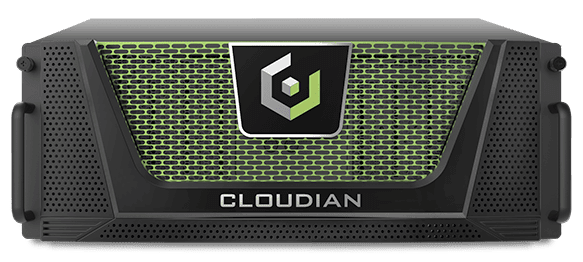
Cloudian HyperStore is a software-defined, S3-compatible object storage platform designed for on-premises and hybrid cloud deployments. HyperStore provides organizations with unlimited scalability and native S3 compatibility, enabling them to manage massive volumes of unstructured data while maintaining complete control over data location, security, and economics.
Key features include:

Rackspace offers a secure private cloud storage solution for organizations that require dedicated infrastructure without sacrificing the scalability and agility of public cloud environments. Their private cloud services are built on software-defined data center (SDDC) architectures, enabling organizations to run cloud-native and legacy applications.
Key features include:


Key features include:
IBM Cloud Virtual Private Cloud (VPC) is a software-defined private cloud platform that offers isolated, high-performance environments with the scalability and automation benefits of public cloud. Built on IBM’s secure global infrastructure, it enables organizations to deploy compute, storage, and networking resources with fine-grained control.
Key features include:


Seagate offers private cloud storage solutions engineered for high-density, petabyte-scale environments. These systems are designed for enterprises seeking secure and scalable on-premises storage, with options to deploy modular architectures and advanced redundancy for critical workloads.
Key features include:

When evaluating private cloud storage solutions, organizations must align their selection with business goals, technical requirements, and risk tolerance. Unlike public cloud offerings, private deployments offer greater flexibility and control but also require more deliberate planning to avoid complexity and cost overruns.
Key considerations include:
Private cloud storage solutions provide a secure, customizable foundation for managing critical data and applications in controlled environments. They deliver the flexibility to tailor infrastructure to specific regulatory, performance, and scalability needs while maintaining full visibility and governance. By combining cloud-native capabilities with on-premises control, private cloud storage enables organizations to support modern workloads, ensure data sovereignty, and maintain operational resilience.
See Cloudian first in Google Search

