Your Data. Your Jurisdiction. Your Control.

Talk to an Expert Download Sovereign Case Study

Data sovereignty is no longer a preference — it’s a compliance posture.

Governments worldwide are mandating that organizations demonstrate where their AI data lives, who controls it, and who can access it. On-premises, S3-native storage is the architectural answer.
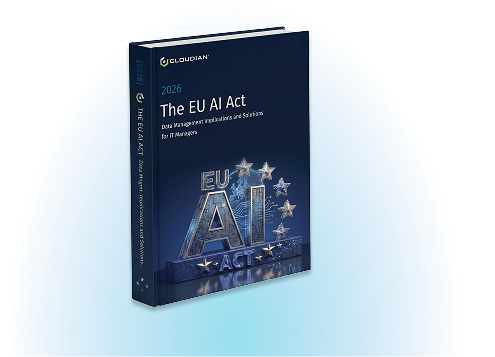
The EU AI Act Report

Discover why EU AI Act compliance must be built into your data infrastructure rather than just the application layer, and how Cloudian HyperStore provides the secure, sovereign storage foundation to protect your organization before enforcement deadlines arrive

Read Report

The Problem: Residency is Not Sovereignty

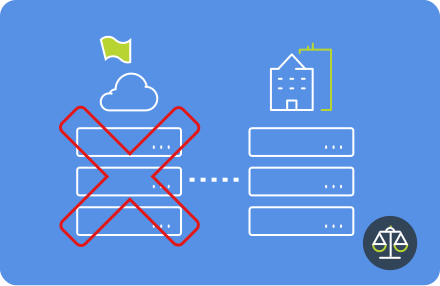
Many organizations assume that selecting a local region from their cloud provider resolves their data sovereignty obligations. It doesn’t.
 
Selecting a local regional zone may change where your data physically sits, but it does not change who can be legally compelled to hand it over.
 
For AI workloads, the exposure runs deeper than storage. Training datasets, inference inputs, and the required audit logs all fall within the same jurisdictional reach. Demonstrating sovereignty requires architecture, not vendor agreements.
The Regulatory Landscape

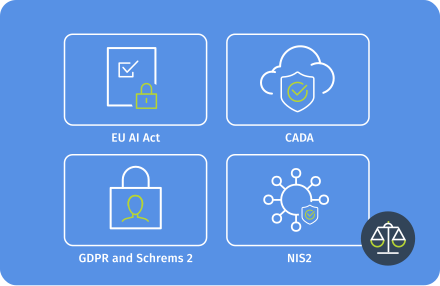
  • EU AI Act: High-risk AI systems must maintain logs that show data lineage, enforce access controls, and support conformity assessments. The obligation is technical, not documentary — logging must be built into the infrastructure, not bolted  on afterward.
  • Cloud and AI Development Act (CADA): Proposed four-tier sovereignty classification framework for cloud and artificial intelligence infrastructure, intended to reduce dependence on infrastructure controlled by non-European firms.
  • GDPR and Schrems II: Personal data processed by AI systems must remain under EU legal jurisdiction. Contractual assurances with US-headquartered providers are insufficient. The legal control point is the service provider’s corporate headquarters, not the data center location.
  • NIS2: This defines extended cybersecurity obligations across energy, healthcare, transport, digital infrastructure, and public administration, with national authorities in direct oversight of systems underpinning critical functions.

Why On-Premises Object Storage Is the Architecture of Sovereignty

  • Control the Data Layer: On-premises deployment eliminates CLOUD Act exposure by design. No US-headquartered provider in the chain means no extraterritorial legal reach — by architecture, not by contract.
  • Meet Article 12 Without Retrofitting: S3 Object Lock delivers tamper-evident, WORM-compliant immutable storage that satisfies EU AI Act logging retention requirements (6-month minimum; 24 months for biometric systems). Compliance is built in, not bolted on.
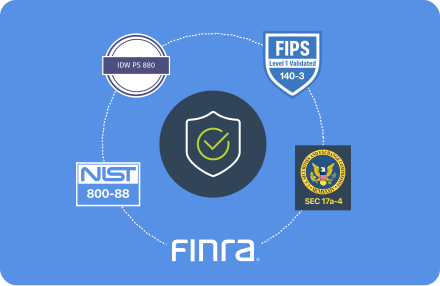
  • Prove It to a Regulator: FIPS 140-3 and NIST 800-88 provide the conformity assessment documentation that auditors and procurement officers in regulated industries require.
  • Keep AI Data Where Regulations Require It: Training data, inference inputs, RAG document stores, and VSS video pipelines all remain within the organization’s legal jurisdiction — with per-tenant RBAC, AES-256 + KMIP encryption with customer-managed keys, and full metadata traceability.

Cloudian Sovereignty 
Credentials

HyperStore offers multiple certifications to help meet your sovereignty objectives:
  • NVIDIA Foundation Certified Storage
  • FIPS 140-3 Validated
  • NIST 800-88 Compliant
    S3 Object Lock (WORM)
  • FINRA / CFTC Compliant
  • AES-256 + KMIP (Customer-Managed Keys)

Sovereignty Starts with Knowing Where Your Data Is

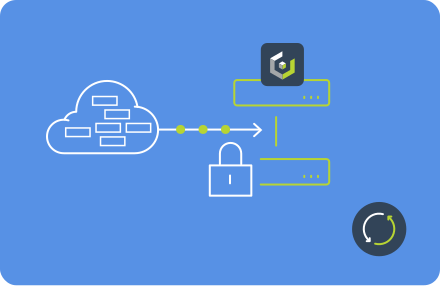
  • Repatriation – Bringing Data Back Under Control: For many organizations, the path to sovereignty runs through repatriation. Data that migrated to the public cloud sits outside the jurisdiction, access controls, and audit trail that regulators require. Cloudian’s Reverse Tiering makes repatriation incremental and non-disruptive.
  • Hybrid as an Operating Model: Repatriation is not a one-time event. HyperStore’s global namespace and auto-tiering allow organizations to maintain a hybrid footprint as a stable operating model, keeping regulated, sensitive, and AI-workload data on-premises, while retaining cloud access for burst capacity or secondary workloads.
  • Sovereignty Compliance from Day One: As data moves on-premises, it immediately falls under HyperStore’s full compliance and access control framework — RBAC, S3 Object Lock, AES-256 encryption with customer-managed keys, and immutable audit logging. There is no gap between “data arrived” and “data is governed.” For organizations working toward regulatory compliance, that continuity matters.

The EU AI Act deadline is 2 August 2026. This is not a planning horizon. It’s an architecture decision.

Trial
Talk to a Sovereignty Specialist

See how HyperStore fits your sovereign architecture.

Schedule a Call


Trial
Sovereign AI Case Study

Begasoft Builds a Swiss-Sovereign AI Data Lake

Download Now

Get Started With Cloudian Today

Cloudian
Privacy Overview

This website uses cookies so that we can provide you with the best user experience possible. Cookie information is stored in your browser and performs functions such as recognising you when you return to our website and helping our team to understand which sections of the website you find most interesting and useful.