


Request a Demo
Join a 30 minute demo with a Cloudian expert.
S3 compatible storage solutions are alternative object storage services that use the Amazon S3 API, allowing them to work seamlessly with applications that already integrate with S3. These solutions range from self-hosted options like Cloudian to cloud providers like Wasabi. They offer flexibility, cost savings, and help organizations void vendor lock-in.
S3 compatible storage solutions replicate the interface and functionality of Amazon’s Simple Storage Service (S3). This compatibility makes it easier for organizations to migrate workloads between storage providers or to deploy on-prem or hybrid storage architectures without having to rewrite applications or switch out data access protocols.
This is part of a series of articles about S3 Storage
In this article:
Organizations choose S3 compatible storage for several practical and strategic reasons. These solutions provide a consistent interface for managing object storage, but with added flexibility in terms of deployment, cost, and control. Below are the key motivations:

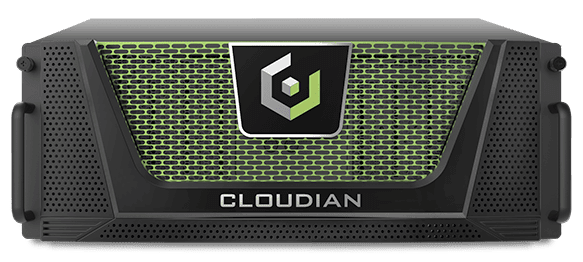
Cloudian HyperStore is a software-defined, S3-compatible object storage platform designed for on-premises and hybrid cloud deployments. HyperStore provides organizations with unlimited scalability and native S3 compatibility, enabling them to manage massive volumes of unstructured data while maintaining complete control over data location, security, and economics.
Key features include:

Wasabi Hot Cloud Storage is an S3 compatible object storage platform for high-performance cloud storage without the complexity of traditional hyperscale providers. Compatible with AWS S3 APIs, it allows users to migrate existing applications with no code changes while gaining control over storage costs.
Key features include:


Backblaze B2 Cloud Storage is an always-hot, S3 compatible object storage service for scalability and integration. It provides security, predictable pricing, and feature access with no fees for egress or API usage. Intended for open cloud environments, B2 supports a range of workloads from backups to active media archives.
Key features include:


DigitalOcean Spaces is a scalable, S3 compatible object storage solution for storing and delivering large datasets, static assets, and backups. With global CDN support and predictable pricing, Spaces offers developers and teams a way to deploy storage for web apps, video delivery, software distribution, and data archiving.
Key features include:


Cloudflare R2 is a globally distributed, S3 compatible object storage service intended to eliminate the high costs of data egress while enabling flexible, multicloud architectures. Built on Cloudflare’s network of data centers, R2 supports low-latency access to unstructured data while avoiding vendor lock-in.
Key features include:

Organizations can improve the performance and cost-effectiveness of their storage solutions by implementing the following practices.
Data durability in object storage is achieved through replication, erasure coding, and geographic distribution of data. When designing an S3 compatible storage deployment, it’s important to enable redundancy at multiple levels, such as across disks, nodes, and (where applicable) availability zones or data centers. This ensures data remains available even in the event of hardware failures or facility outages, reducing the risk of data loss over time.
Early architecture decisions have a lasting impact, so organizations should choose redundancy and replication strategies in line with their risk tolerance and regulatory obligations. For example, critical datasets may require replication across geographically separated sites, while less sensitive data can use local redundancy to minimize cost.
Security is essential in S3 compatible environments, as these systems often store critical or sensitive data accessed by multiple teams or automated processes. Establishing standardized security policies, including bucket policies, encryption standards, and user access controls, helps ensure consistency and prevents misconfigurations that could lead to data exposure. Integration with internal IAM systems helps align storage access with organizational roles.
Effective IAM governance should include routine access reviews, separation of duties, and use of least-privilege principles. Tools and configurations should be put in place to monitor and audit storage activity, enabling detection of unauthorized access or policy violations.
Performance bottlenecks often surface as S3 compatible systems scale, especially under high request rates or with large numbers of small objects. Designing for predictable performance requires attention to storage backend throughput, network capacity, and request distribution strategies. Load balancing, partitioning data across buckets or namespaces, and tuning storage node hardware are key levers for optimization.
Organizations should also test at production-like scales before deployment, identifying latency sources and headroom limits. Monitoring tools can provide visibility into IOPS, latency, and throughput, enabling proactive responses to traffic spikes. By designing for performance headroom and scalability from the outset, teams reduce the odds of unplanned downtime.
Object lifecycle management is a core capability of S3 compatible systems, allowing organizations to automate the transition and deletion of data based on age, frequency of access, or compliance constraints. By defining and enforcing lifecycle policies, teams can move infrequently accessed data to lower-cost tiers or delete obsolete objects, directly lowering storage expenses without manual intervention.
Lifecycle management also enhances compliance by reliably deleting data in line with retention requirements, and by minimizing the surface area for accidental exposure. Organizations should regularly review and adjust policies as data ages and application usage evolves, leveraging automation wherever possible to maintain both cost control and regulatory alignment.
Even with S3 API standardization, differences exist between providers and products regarding API nuance, consistency, and edge-case behavior. Before moving production workloads, teams should validate cross-platform compatibility, including multipart uploads, versioning, and ACL handling, against their target S3 compatible systems. This helps avoid unexpected application errors or data integrity issues.
Failover and disaster recovery capabilities must also be tested under realistic scenarios. Organizations should examine how each solution handles node failures, network interruptions, or availability zone loss, and document operational runbooks for each event. Regular failover drills that simulate outages can surface weaknesses in replication, consistency guarantees, or application failover logic.
S3 compatible storage solutions provide a flexible and cost-efficient alternative to proprietary cloud storage, allowing organizations to maintain application portability while tailoring infrastructure to their needs. By adopting these systems, businesses can deploy object storage across cloud, on-premises, and hybrid environments without rewriting code. Their API standardization simplifies integration, while features like lifecycle management, security controls, and scalability help align storage operations with performance, compliance, and budgetary goals. As data volumes and storage requirements grow, S3 compatibility ensures adaptability without vendor lock-in or architectural disruption.
See Cloudian first in Google Search

