


Request a Demo
Join a 30 minute demo with a Cloudian expert.
AWS S3 (Simple Storage Service) is a scalable online storage solution provided by Amazon Web Services (AWS). It can store and retrieve any amount of data, using an object storage model where data is stored as objects, making it efficient for large-scale data management.
Each object consists of data, metadata, and a unique identifier, enabling easy access. Its scalability ensures that users can dynamically adjust their storage requirements according to demand. AWS S3 storage is used across industries due to its durability, availability, and cost-effectiveness.
AWS S3 provides features like data versioning, lifecycle policies, and easy integration with other AWS services for seamless workflows. It is suitable for various use cases, including static website hosting, backup, and big data analytics.
Editor’s note: Updated the article to reflect recent updates to Amazon S3 and updated features and capabilities of S3 storage solutions in 2026.
While Amazon S3 is widely adopted for its scalability and integration with AWS services, relying solely on cloud-based storage can pose limitations for certain use cases. Organizations with strict data sovereignty requirements, such as those in healthcare, finance, or government sectors, may need to retain full control over their data and ensure compliance with local regulations.
On-premise S3-compatible solutions provide a way to meet these needs without sacrificing the flexibility of the S3 API. Latency-sensitive workloads also benefit from on-premise deployments. Applications requiring fast data access—such as machine learning pipelines, video processing, or real-time analytics—can experience performance bottlenecks when relying on remote cloud storage.
Cost control is another driving factor. While public cloud storage is cost-effective for many scenarios, unpredictable egress charges, API request fees, and long-term data growth can lead to unexpected expenses. On-premise options offer fixed-cost infrastructure with full visibility into resource usage, making it easier to manage budgets at scale.
Organizations looking to build hybrid or edge architectures often need S3-compatible storage outside of AWS. This allows them to develop applications using familiar APIs while maintaining infrastructure independence, reducing vendor lock-in and improving system resilience.
Amazon S3 recently introduced several enhancements focused on performance, scalability, analytics, and support for AI and data-intensive workloads. These updates expand S3’s role from simple object storage to a core platform for large-scale analytics and machine learning pipelines.
These developments highlight AWS’s ongoing effort to transform S3 into a high-performance data platform capable of supporting analytics, AI/ML workloads, and massive-scale data processing while maintaining the durability and scalability that made the service popular.
To address the challenges of providing S3-compatible storage, various tools and platforms are available to optimize cost, performance, and security. Below, we review notable solutions.

Cloudian offers a software-defined object storage platform optimized for AI, big data, and analytics workflows. Built for high-performance environments, it supports the S3 API and integrates with a wide variety of applications in data protection, data analytics, and AI tools like PyTorch, TensorFlow, and Apache Spark. Cloudian enables organizations to consolidate data into a secure, scalable, and cost-efficient storage architecture.
Key features include:
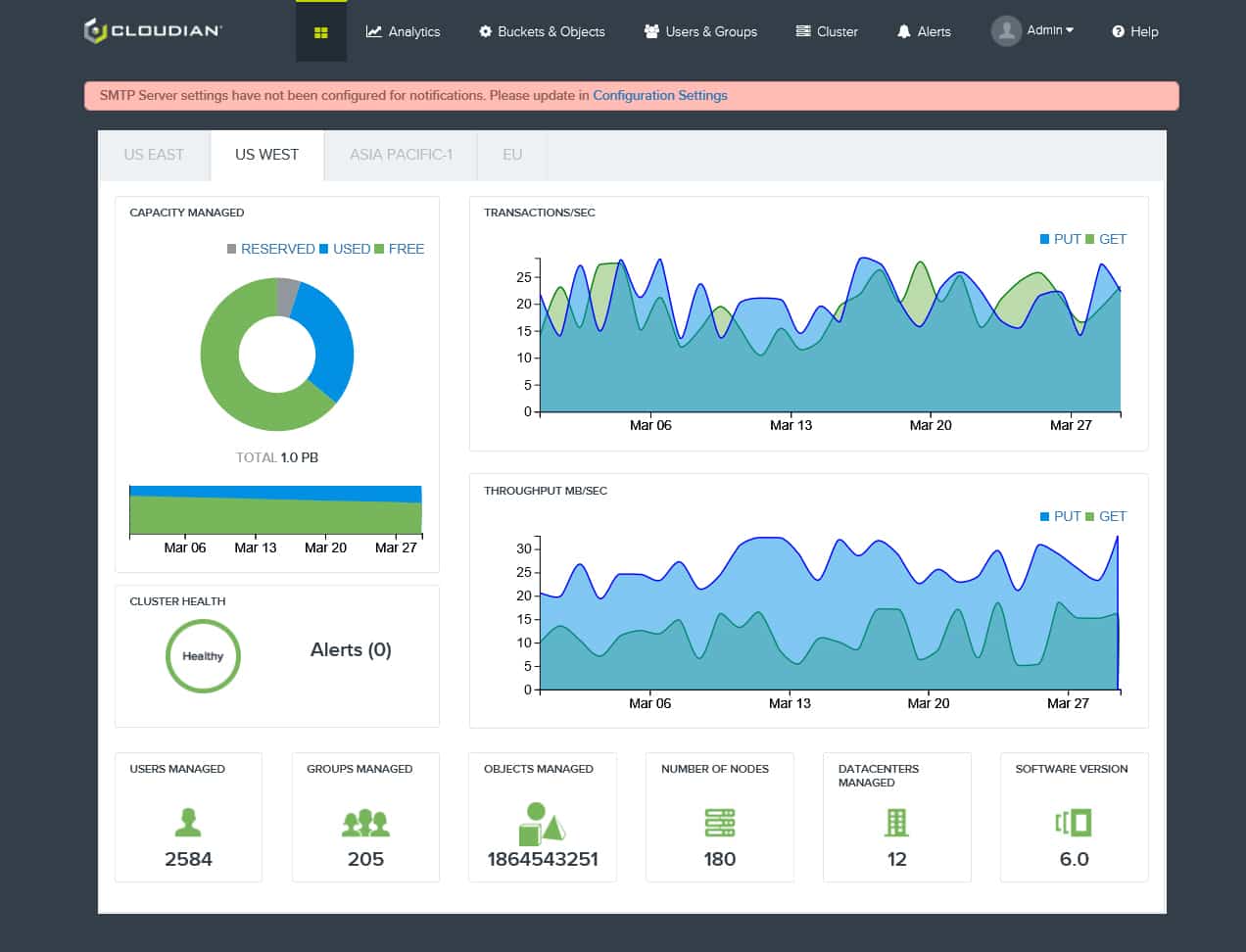

Ceph is an open-source distributed storage platform that provides scalable storage using commodity hardware. It delivers unified storage capabilities through object, block, and file interfaces in a single cluster, allowing organizations to manage different data types from one system. Ceph is commonly used in cloud, container, and on-premise environments where large-scale distributed storage and infrastructure flexibility are required.
Key features include:


NetApp StorageGRID is a software-defined object storage system to manage large volumes of unstructured data across on-premises, cloud, and hybrid environments. It provides native support for Amazon S3 APIs and is commonly used for data lakes, analytics workloads, backup, and long-term data retention. StorageGRID focuses on scalability, automated data management, and integration with broader cloud ecosystems.
Key features include:
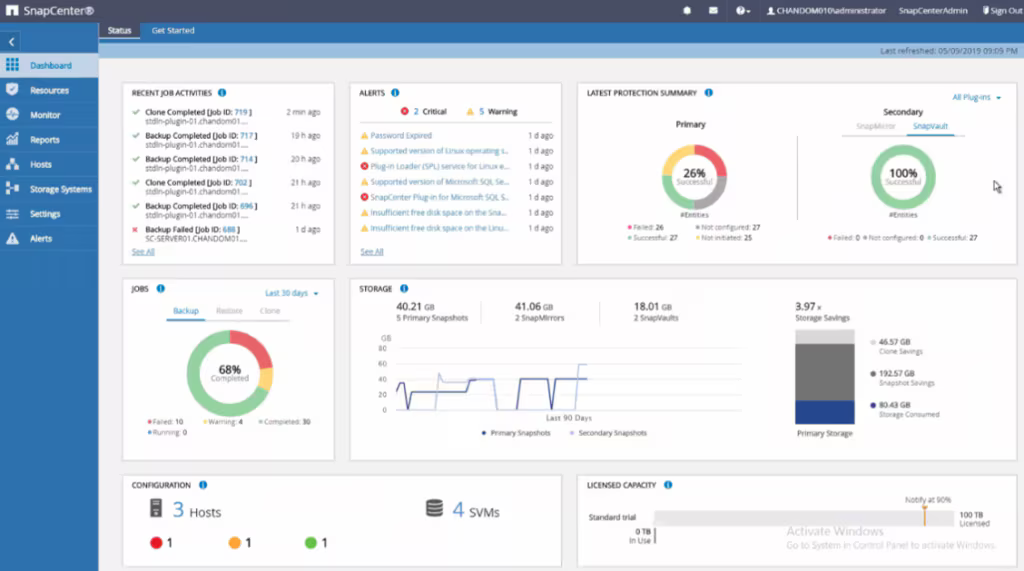
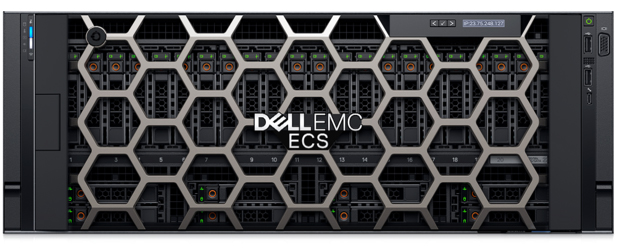
Dell Elastic Cloud Storage (ECS) is an enterprise object storage platform that manages large volumes of unstructured data within on-premise or hybrid cloud environments. It provides scalable object storage with cloud-like capabilities while allowing organizations to maintain control of their infrastructure behind the enterprise firewall. ECS supports modern workloads such as analytics, IoT, data lakes, and application development.
Key features include:

Scality provides S3-compatible object storage platforms for large-scale enterprise environments and cloud providers. Its storage architecture focuses on high performance, durability, and operational resilience for workloads that involve large volumes of unstructured data. Scality platforms are commonly used for applications such as AI data pipelines, backup storage, archival systems, and large-scale analytics environments.
Key features include:
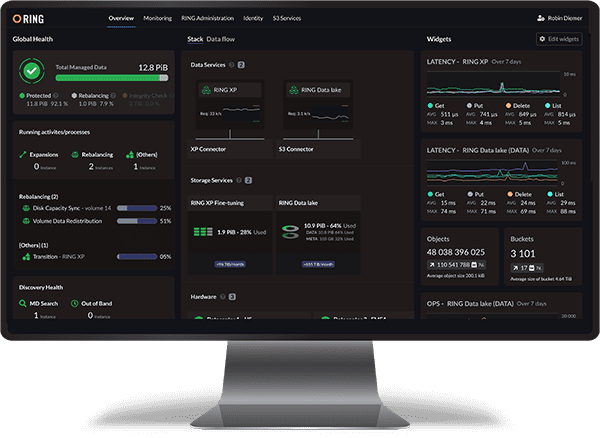
Effectively managing S3 storage requires more than just storing data—it involves strategic planning around cost, security, performance, and lifecycle management. As storage needs scale, so does the complexity of maintaining visibility and control. Addressing these challenges demands a combination of automation, policy enforcement, and integration with broader infrastructure strategies to ensure efficient and secure data management across environments.
See Cloudian first in Google Search

