


Request a Demo
Join a 30 minute demo with a Cloudian expert.
TL;DR: Vendor-neutral storage platforms use open standards and software-defined deployment to keep enterprise data portable across on-prem and cloud. Best for avoiding lock-in: Cloudian (hybrid on-prem), MinIO (AI workloads), Wasabi (low-cost cloud), and Backblaze B2 (open portability).
Enterprise storage platforms help avoid vendor lock-in by decoupling data storage from the underlying infrastructure. They use open-source APIs, S3-compatibility, and containerized microservices to allow organizations to seamlessly move data across on-premises servers and multiple public clouds without rewriting applications or paying high egress fees.
Storage vendor lock-in occurs when an organization becomes dependent on a particular storage provider’s products, technology, or services, making it difficult or costly to switch to an alternative. This typically happens due to proprietary hardware, software, APIs, or file formats that are incompatible with other vendors’ solutions. As a result, enterprises may find themselves tied to a single vendor’s ecosystem, even if better or more cost-effective options become available elsewhere.
This is part of a series of articles about data backup
In this article:
The table below summarizes the key differences between the platforms covered in this guide. We explore each of them in more detail in the sections that follow.
| Category | Solution | Best For | How It Avoids Lock In | Things to Consider |
| Software-Defined Storage Platforms | Cloudian HyperStore | Consolidating unstructured data on-prem and across hybrid cloud | Native S3 API, hardware freedom, unified file and object, per-bucket protection | Enterprise deployment benefits from planning and vendor support |
| Software-Defined Storage Platforms | MinIO AIStor | AI and analytics teams needing S3-native storage on any infrastructure | Full S3 API, runs anywhere, active-active replication, AI framework integration | Documentation and community resources thinner than some rivals |
| Software-Defined Storage Platforms | Scality RING | Large enterprises scaling petabyte-to-exabyte object and file storage | Complete S3 API, hybrid-cloud namespace, no lock-in, 14 nines durability | Setup and admin interfaces suit larger, well-resourced teams |
| Software-Defined Storage Platforms | IBM Storage Ceph | Teams wanting open-source-based unified block, file, and object storage | Three-in-one storage, S3 with AWS fidelity, runs on standard x86 | Setup and maintenance favor experienced, hands-on teams |
| Software-Defined Storage Platforms | DataCore Swarm | On-prem active archive, backup targets, and long-term retention | Runs on any x86 mix, S3/HTTP access, WORM immutability, hardware freedom | Entry footprint and licensing aimed at larger deployments |
| Independent Cloud Storage Services | Wasabi Hot Cloud Storage | Predictable-cost offsite backup, archive, and hybrid cloud storage | No egress/API fees, full S3 and IAM API compatibility, immutability | Single tier, 90-day minimum storage, fair-use egress policy |
| Independent Cloud Storage Services | Backblaze B2 | Cost-effective, portable object storage for apps, backup, and media | S3-compatible, open cloud portability, free egress up to 3x, immutability | Web console and bulk operations less suited to large-scale admin |
| Independent Cloud Storage Services | IDrive e2 | Budget-conscious S3-compatible storage for backup, archive, media | S3-compatible, no egress/API fees, free migration, object lock | Console polish and email-based support noted by users |
One of the most immediate impacts of vendor lock-in is the high cost of data egress and migration. Many storage vendors impose significant fees when customers attempt to move large volumes of data out of their platforms. These egress charges can escalate, especially for enterprises with petabytes of critical information, making the cost of switching providers or adopting hybrid strategies prohibitive.
Beyond direct egress fees, data migration requires planning, bandwidth, and resources. Enterprises must allocate time and technical expertise to ensure data integrity, minimize downtime, and maintain compliance during the transition. These hidden costs can delay or prevent organizations from taking advantage of better storage options, effectively trapping them within a single vendor’s ecosystem.
Proprietary APIs and file formats are common mechanisms for enforcing vendor lock-in. When a storage solution uses unique interfaces or data structures, applications and workflows become tightly integrated with that platform. Migrating to another vendor often requires rewriting application logic, converting data formats, or purchasing middleware, all of which introduce risk and cost.
This dependence on proprietary technology also limits innovation and interoperability. Enterprises may find it difficult to integrate new tools or use emerging cloud services if those solutions are not compatible with the incumbent vendor’s APIs. Over time, this reduces flexibility and can prevent organizations from optimizing their storage environments for performance, cost, or security.
Vendor lock-in restricts infrastructure choices by forcing organizations to use only the hardware, software, and cloud services approved by a specific vendor. This limits the ability to build hybrid or multi-cloud architectures, as storage resources cannot be easily moved or integrated across environments. As a result, enterprises may be unable to optimize workloads based on performance, location, or cost.
A lack of infrastructure flexibility also hinders disaster recovery and business continuity planning. Organizations may struggle to replicate or back up data across different platforms, increasing the risk of data loss or prolonged downtime during an outage. In a rapidly changing technology landscape, the inability to adapt infrastructure to evolving business needs can become a competitive disadvantage.
Open storage protocols like NFS, SMB, and S3 allow organizations to interact with data using widely adopted standards rather than proprietary interfaces. By supporting these protocols, storage platforms ensure that applications and workloads can be migrated or integrated across different vendors with minimal disruption. This interoperability is necessary for building hybrid and multi-cloud environments without the risk of lock-in.
Open protocols also simplify application development and deployment. Developers can use familiar tools and libraries, reducing learning curves and compatibility issues. This approach shortens time to value for new projects and enables organizations to respond more quickly to business requirements or changes in technology.
Storage platforms that offer compatibility with multiple cloud providers give enterprises the freedom to choose the best environment for each workload. This capability enables organizations to avoid dependence on a single cloud vendor, reducing the risks associated with service outages, pricing changes, or vendor-specific limitations. Cross-cloud compatibility also supports disaster recovery and data redundancy strategies.
By enabling data movement across clouds, these platforms allow enterprises to optimize for performance, cost, and compliance. Workloads can shift between providers based on business needs, regulatory requirements, or market conditions. This agility is important for organizations operating in a changing digital landscape.
Software-defined storage (SDS) abstracts data management from the underlying hardware, allowing enterprises to deploy storage solutions on commodity servers, virtual machines, or cloud infrastructure. This flexibility eliminates the need for proprietary appliances and reduces dependence on any single vendor’s hardware ecosystem. Enterprises can scale storage capacity or performance by adding generic resources.
SDS platforms also simplify upgrades and maintenance, as software updates can be deployed independently of hardware refresh cycles. This decoupling increases the agility of IT operations and enables organizations to adopt new storage technologies without disruptive migrations. By using software-defined models, enterprises can extend the lifespan of their storage investments and reduce the risk of technology stagnation.
Unified management platforms enable organizations to control storage resources across on-premises, cloud, and hybrid environments from a single interface. This centralized approach simplifies administration, reduces operational overhead, and ensures consistent policy enforcement regardless of where data resides. Enterprises gain visibility into their storage landscape, making it easier to monitor usage, allocate resources, and manage costs.
Unified management also simplifies compliance and security processes. Policies can be defined and enforced globally, reducing the risk of configuration drift or data exposure. This capability is especially valuable for organizations subject to regulatory requirements or those operating in distributed environments.
S3 API compatibility is crucial for enterprises adopting cloud-native architectures or seeking to integrate with a wide range of modern applications. By supporting the de facto standard for object storage, vendor-neutral platforms enable integration with:
This compatibility reduces migration complexity and supports interoperability across different cloud and on-premises environments. S3 API compatibility also supports long-term flexibility. Organizations can move data between platforms or clouds that support the same API without extensive re-engineering. This approach reduces lock-in and protects storage investments as requirements change.
Protocol support enables enterprises to address diverse workloads and application requirements. This includes:
NFS and SMB support traditional file-based workloads, while object storage is often used for unstructured data and cloud-native applications. Vendor-neutral platforms that support all three protocols allow organizations to consolidate storage infrastructure and simplify management.
Multi-protocol support also simplifies data sharing across departments or business units. Users can access the same storage resources using their preferred protocols, reducing the need for duplicate infrastructure. This versatility supports organizations with mixed environments or evolving storage requirements.
Open APIs are important for integrating storage platforms with other IT systems, including backup, monitoring, and orchestration tools. By exposing well-documented, standards-based interfaces, vendor-neutral platforms enable enterprises to automate routine tasks such as:
This automation reduces operational overhead. Support for automation frameworks like Ansible, Terraform, or Kubernetes further increases agility. Enterprises can implement infrastructure as code practices, ensuring consistent and repeatable deployments across environments. Open APIs and automation support are important for organizations that prioritize operational flexibility.
Built-in replication and migration capabilities make it easier to move data between storage systems without relying on proprietary tools or complex manual processes. Enterprises can replicate data across:
They can also maintain consistent access and data protection. Native migration features also reduce downtime and operational risk during platform transitions. Automated data transfer, integrity checks, and incremental synchronization help organizations move workloads with minimal disruption. As a result, enterprises can change storage providers or modernize infrastructure without becoming dependent on vendor-specific migration utilities.
Vendor-neutral storage platforms can run on a broad range of infrastructure rather than requiring dedicated hardware appliances. Organizations can deploy the same software on:
This allows them to choose the option that fits their budget and performance requirements. This hardware flexibility improves purchasing power and simplifies future expansion. Enterprises can replace or upgrade infrastructure components independently instead of following a single vendor’s refresh cycle. The ability to mix hardware generations and suppliers helps reduce capital costs while avoiding long-term dependence on a proprietary hardware ecosystem.
Policy-based data mobility allows administrators to define rules that automatically move data based on criteria such as:
Instead of manually relocating datasets, organizations can ensure that data is stored in the appropriate location throughout its lifecycle. This capability supports hybrid and multi-cloud strategies by enabling movement of data between on-premises storage and cloud environments. Automated policies help optimize storage costs, improve application performance, and maintain compliance without changing user workflows or application access patterns.
How we selected these tools: We shortlisted vendor-neutral storage platforms based on open protocol support (S3, NFS, SMB), software-defined deployment, multi-cloud compatibility, and freedom from proprietary hardware and egress lock-in.

Best for: Consolidating unstructured data on-prem and across hybrid cloud.
Strengths: Native S3 API, hardware freedom, unified file and object storage.
Things to consider: Enterprise-scale deployment benefits from planning and vendor support.
Cloudian HyperStore is software-defined object storage that runs on industry-standard hardware, available either as Cloudian appliances or as software deployed on the servers or virtual machines a customer already uses. It manages unstructured data as both objects and files and consolidates it into a single storage pool.
Distributed data is presented as one flat S3 namespace that spans a single site, multiple sites, and public cloud, all managed as one system. The architecture is peer-to-peer with no central controller, so every node serves I/O and capacity scales alongside throughput as nodes are added.
Key features include:
Limitations (as reported by users on G2):
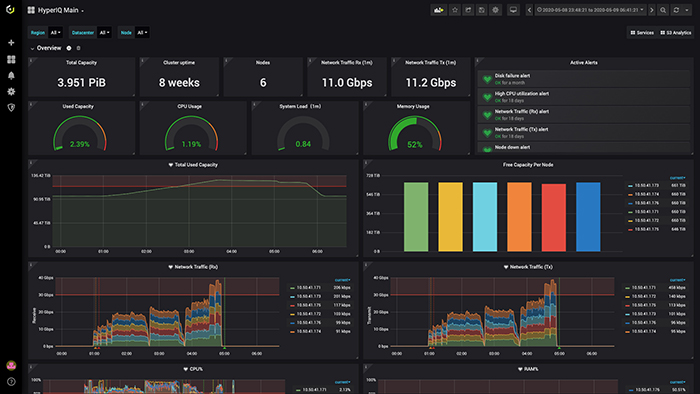

Best for: AI and analytics teams needing S3-native storage on any infrastructure.
Strengths: Full S3 API, runs anywhere, active-active multi-site replication.
Things to consider: Documentation and community resources are thinner than some rivals.
MinIO AIStor is a software-defined, S3-compatible object store built for AI and analytics workloads. It scales within a single flat namespace from petabytes to exabytes and runs across edge, core, and cloud environments on customer-managed infrastructure.
Beyond the S3 API, it connects through S3 Express, an Iceberg catalog, and SFTP, and integrates with common AI and data frameworks. Data services such as replication, versioning, and lifecycle management are built in.
Key features include:
Limitations (as reported by users on G2):
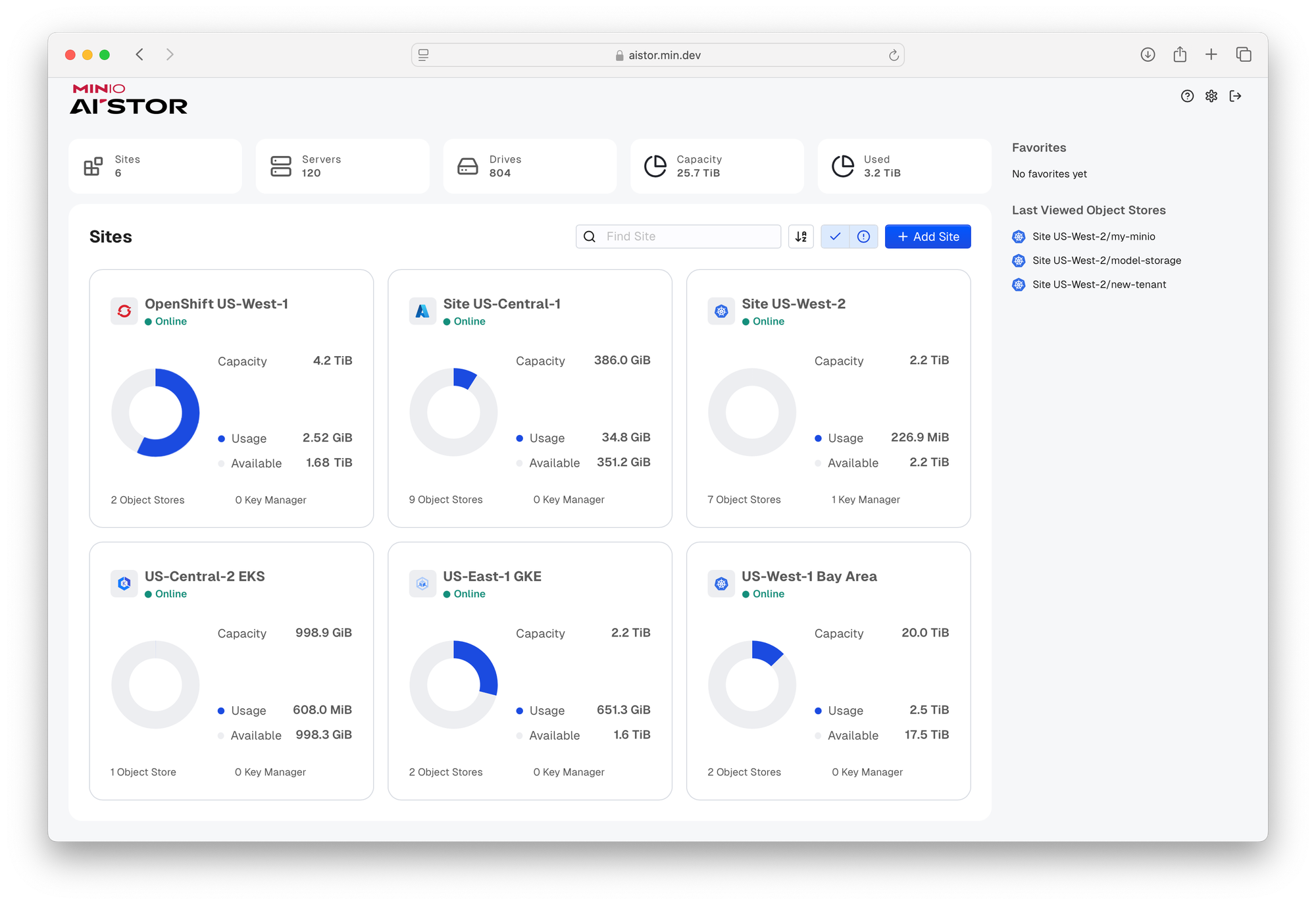

Best for: Large enterprises scaling petabyte-to-exabyte object and file storage.
Strengths: Complete S3 API, hybrid-cloud namespace, no lock-in, 14 nines durability.
Things to consider: Setup and admin interfaces suit larger, well-resourced teams.
Scality RING is software-defined object and file storage that runs on industry-standard servers under a pay-as-you-grow model. It scales across capacity, performance, buckets, sites, and clouds, handling deployments from a single petabyte to over a hundred.
The platform exposes a hybrid-cloud S3 namespace so data can be mobilized across on-premises and cloud from one system, and it layers CORE5 cyber resilience across the stack. An all-flash configuration, RING XP, targets performance-sensitive workloads.
Key features include:
Limitations (as reported by users on PeerSpot):
Best for: Teams wanting open-source-based unified block, file, and object storage.
Strengths: Three-in-one storage, S3 with AWS fidelity, runs on standard x86.
Things to consider: Setup and maintenance favor experienced, hands-on teams.
IBM Storage Ceph is an enterprise-grade, software-defined storage platform with a three-in-one architecture that unifies block, file, and object data in a single distributed system. It is based on open-source Ceph and comes with IBM support.
It runs on clustered x86 industry-standard hardware and provides S3-compatible object storage with high fidelity to AWS services such as IAM, SSE, and object lock, including replication across multiple locations and public clouds. Deployment options span software-only, certified servers, and a managed service.
Key features include:
Limitations (as reported by users on PeerSpot):

Best for: On-prem active archive, backup targets, and long-term data retention.
Strengths: Runs on any x86 mix, S3/HTTP access, WORM immutability.
Things to consider: Entry footprint and licensing are aimed at larger deployments.
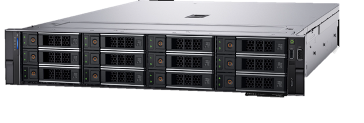
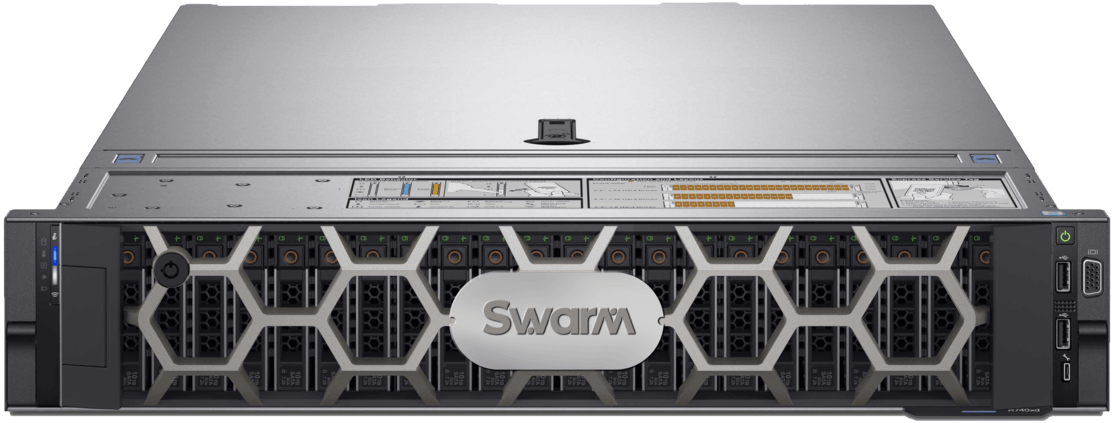
DataCore Swarm is on-premises object storage that provides S3 and HTTP(S) access to applications, devices, and users. It pools any mix of x86 servers, HDDs, and SSDs into a self-managing, self-healing cluster used for active archives, backup targets, and long-term preservation.
Data services include multi-tenancy, immutability, replication, and metadata search, and cold data can be tiered to public cloud. FileFly can offload files from existing NAS and SMB shares into Swarm.
Key features include:
Limitations (as reported by users on PeerSpot):

Best for: Predictable-cost offsite backup, archive, and hybrid cloud storage.
Strengths: No egress or API fees, full S3 and IAM API compatibility, immutability.
Things to consider: Single tier, 90-day minimum storage, fair-use egress policy.
Wasabi Hot Cloud Storage is a single-tier cloud object storage service with no fees for egress or API requests. It is fully compatible with the AWS S3 and IAM APIs, so applications built for S3 work against it without code changes.
Data is stored in SOC 2 and ISO 27001 certified data centers across 16 regions, with security features including encryption, immutability, and a virtual air-gap option. Reserved capacity is available for longer-term commitments.
Key features include:
Limitations (as reported by users on G2):

Best for: Cost-effective, portable object storage for apps, backup, and media.
Strengths: S3-compatible, open cloud portability, free egress up to 3x, immutability.
Things to consider: Web console and bulk operations are less suited to large-scale admin.
Backblaze B2 is always-hot, S3-compatible object storage built for the open cloud, designed to integrate with a customer’s tech stack. It fits multi-cloud and hybrid cloud strategies through APIs, a CLI, and a web UI.
All users get free egress up to three times their monthly storage, with unlimited free egress through many CDN and compute partners. Migration tooling supports moving data in from other clouds and on-premises systems.
Key features include:
Limitations (as reported by users on G2):

Best for: Budget-conscious S3-compatible storage for backup, archive, and media.
Strengths: S3-compatible, no egress or API fees, free migration, object lock.
Things to consider: Console polish and email-based support are noted by users.
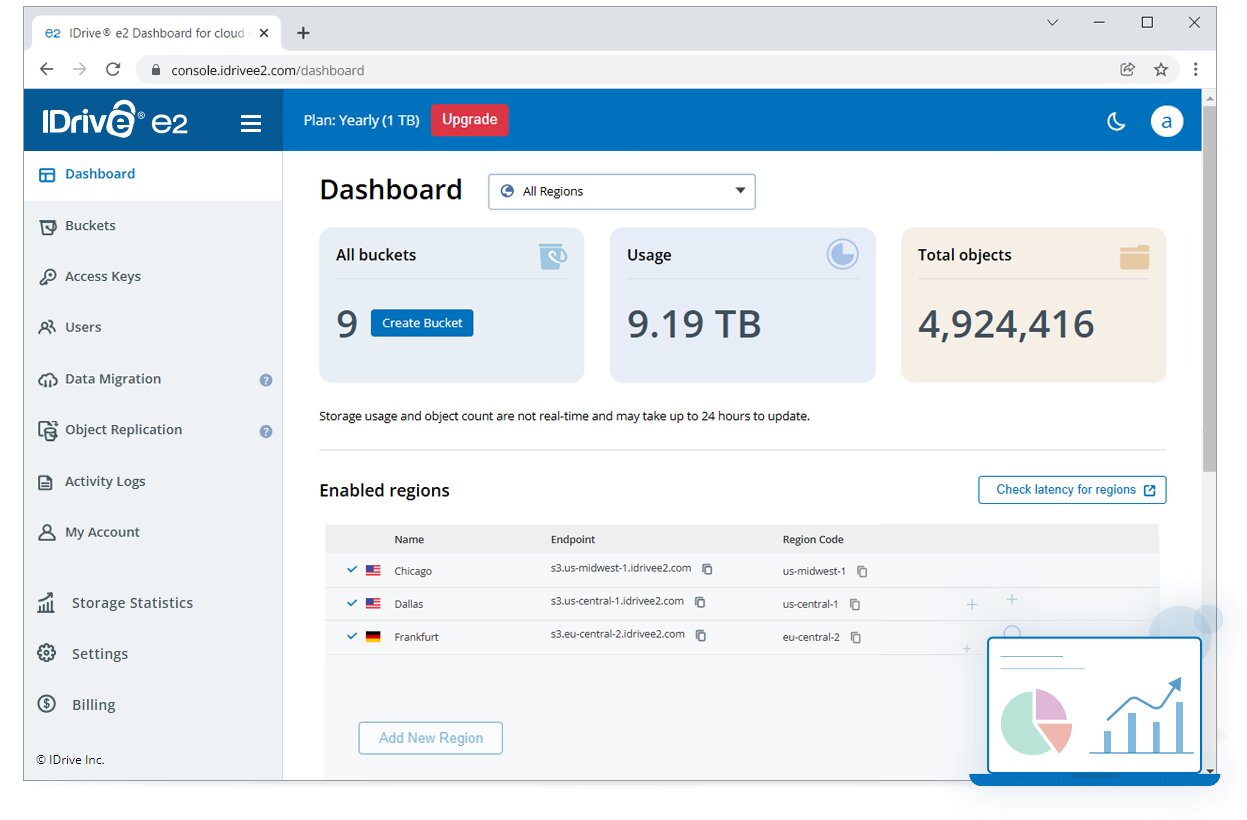
IDrive e2 is Amazon S3-compatible cloud object storage that works with existing S3 tools, SDKs, and gateways. It carries no fees for egress or API requests and spans 15 storage regions, with per-user region endpoints and access keys.
The service targets backup, archival, media workflows, AI/ML datasets, and data lakes, and includes free migration of data from other cloud providers. Immutability and versioning features support ransomware protection and compliance.
Key features include:
Limitations (as reported by users on G2):
Avoiding storage vendor lock-in requires more than selecting a storage platform with open APIs. Organizations should prioritize solutions that support open standards, software-defined deployment, multi-cloud interoperability, and policy-driven data mobility to maintain long-term flexibility. By keeping data portable across different infrastructure and cloud providers, enterprises can reduce migration costs, negotiate better pricing, strengthen resilience, and adapt their storage strategy as business and technology requirements evolve.
See Cloudian first in Google Search

