


Request a Demo
Join a 30 minute demo with a Cloudian expert.
TL;DR: Petabyte-scale object storage manages 1 PB or more of unstructured data as scalable, durable objects. Best for on-prem control: Cloudian HyperStore; for software-defined scale: MinIO AIStor and Scality RING; for fully managed cloud: Amazon S3.
Choosing petabyte-scale object storage requires prioritizing limitless scaling, S3-API compatibility, and data protection (Erasure coding). You must also balance storage costs with data transfer fees. The best choice depends on whether your workload requires high-speed flash for active analytics or high-density HDDs for long-term archives:
Key evaluation criteria for object storage solutions for petabyte-scale workloads:
Solutions compared in this guide:
In this article:
The table below summarizes the key differences between the platforms covered in this article. We explore each of them in more detail in the sections that follow.
| Category | Solution | How It Meets the Criteria |
| Software-Defined & On-Premises | Cloudian HyperStore | Delivers S3-compatible object storage with shared-nothing scaling, per-bucket erasure coding, multi-tenancy, Object Lock, and hybrid cloud support for petabyte- to exabyte-scale deployments. |
| Software-Defined & On-Premises | MinIO AIStor | Provides high-performance, stateless S3 object storage with native erasure coding, object immutability, lifecycle management, and linear scaling for AI and analytics workloads. |
| Software-Defined & On-Premises | Scality RING | Combines multidimensional scaling, erasure coding, geo-distributed resilience, S3 compatibility, and cyber resilience features for large enterprise object storage environments. |
| Software-Defined & On-Premises | Dell ObjectScale | Kubernetes-native S3 object storage offering exascale growth, global namespace, Object Lock, AI-optimized access, and multi-site federation for enterprise deployments. |
| Software-Defined & On-Premises | IBM Cloud Object Storage | Uses patented information dispersal, geo-distributed erasure coding, immutable storage, and automated data management to deliver highly durable petabyte-scale object storage. |
| Cloud Object Storage Services | Amazon S3 | Fully managed object storage with virtually unlimited scalability, multiple storage classes, lifecycle automation, strong durability, and deep integration across AWS services. |
| Cloud Object Storage Services | Microsoft Azure Blob Storage | Managed cloud object storage with multiple performance tiers, lifecycle policies, Data Lake Storage Gen2, immutable storage, and Microsoft security integration. |
| Cloud Object Storage Services | Google Cloud Storage | Managed object storage featuring automatic tiering, multi-region replication, lifecycle management, advanced security controls, and integration with Google analytics and AI services. |
Related content: Compare the best object storage options for 2026.
Object storage is designed to grow by adding storage nodes rather than replacing existing infrastructure, allowing organizations to expand from terabytes to multiple petabytes or even exabytes without disrupting applications. This scale-out architecture supports billions of objects in a single namespace while maintaining consistent management, making it well suited for organizations with rapidly growing or unpredictable data volumes.
Evaluation criteria:
Cost efficiency is another advantage of object storage at petabyte scale. Traditional storage systems often require overprovisioning or expensive hardware to accommodate growth, leading to underused resources and higher costs. In contrast, object storage uses commodity hardware and supports incremental scaling, so organizations pay only for the capacity they use and can expand storage in manageable increments.
Evaluation criteria:
Modern data workloads such as AI training, big data analytics, media streaming, and IoT data collection require storage systems that can handle large, unstructured data sets efficiently. Object storage fits these requirements because it allows storage and retrieval of diverse data types, regardless of file size or format. The flat namespace removes bottlenecks associated with hierarchical file systems, enabling high throughput and parallel access.
Evaluation criteria:
A petabyte-scale object storage system must deliver capacity scalability, allowing organizations to expand storage without service interruptions or complex migrations. This is achieved through a distributed architecture that enables the addition of storage nodes or drives without affecting system performance or data integrity. Scalability also involves managing billions of objects efficiently so that performance and reliability remain consistent as the system grows.
Effective capacity scalability includes:
This automation reduces administrative effort and ensures that the system can handle sudden spikes in data ingestion or unpredictable growth patterns. The ability to scale quickly and smoothly is a core requirement for petabyte-scale deployments.
Performance at petabyte scale requires storage systems to maintain consistent throughput and low latency as the number of objects and users increases. Object storage achieves this by distributing data and workloads across multiple nodes, allowing parallel access and processing. This architecture supports high-bandwidth workloads such as:
Another key aspect is support for simultaneous access from multiple applications or users. Object storage systems handle concurrent read and write operations through distributed metadata management and caching. This capability is vital where many users or applications interact with large data sets at the same time.
Durability in petabyte-scale object storage is achieved through mechanisms such as data replication and erasure coding, which ensure that data remains intact in the event of hardware failures. These systems distribute copies or fragments of data across multiple physical locations, enabling the system to reconstruct lost or corrupted data automatically. This approach reduces the risk of data loss when managing valuable or irreplaceable data sets.
Data protection also includes:
Object storage monitors for corruption or inconsistencies and takes corrective actions without manual intervention. These built-in protections help organizations meet compliance and business continuity requirements at petabyte scale.
Availability refers to the ability of the storage system to remain accessible and operational during hardware failures, network outages, or maintenance events. Petabyte-scale object storage systems achieve high availability through architectural redundancy, distributing data and services across multiple nodes or data centers. This design removes single points of failure that could disrupt access to stored data.
Resilience enables the system to recover quickly from disruptions and self-heal without data loss or extended downtime. Service continuity is supported by:
Together, availability and resilience are core requirements for organizations that depend on uninterrupted access to large-scale data repositories.
Efficient metadata management is crucial for object storage systems operating at petabyte scale because it enables rapid search, retrieval, and organization of billions of objects. Unlike traditional file systems, object storage associates metadata with each object, supporting data management functions such as tagging, indexing, and lifecycle policies. This metadata-driven approach improves data discoverability and supports automation.
Object management capabilities also include:
These functions are important for maintaining data governance and compliance in regulated environments. Strong metadata and object management help organizations organize, monitor, and control their petabyte-scale data assets while reducing administrative overhead.
S3 API compatibility has become a de facto standard for object storage, enabling integration with a wide range of cloud-native applications and services. When evaluating object storage solutions for petabyte-scale workloads, ensure comprehensive support for the S3 API. This compatibility allows organizations to use existing tools, workflows, and application ecosystems without major re-engineering.
Evaluation criteria:
Erasure coding breaks data into fragments, encodes them with redundant information, and distributes them across storage nodes. This approach provides high durability and efficient capacity use at petabyte scale by allowing recovery from multiple simultaneous failures with less overhead than traditional replication. Replication options determine how data is copied and stored across locations or data centers. Some use cases require synchronous replication, while others prioritize asynchronous replication.
Evaluation criteria:
Lifecycle management allows organizations to automate the movement and deletion of objects based on predefined policies, controlling storage costs and resource use. At petabyte scale, manual data management is impractical, making lifecycle policies necessary. Tiering policies move data to lower-cost storage tiers as it ages or becomes less critical. This reduces demand on high-performance storage and ensures that only active data uses premium resources.
Evaluation criteria:
Object lock and immutability features protect data from modification or deletion for a defined retention period. These capabilities are important for backup repositories, financial records, healthcare data, and other information subject to retention requirements. By enforcing write-once-read-many behavior, object storage prevents accidental changes and malicious attempts to alter stored data.
Evaluation criteria:
Many petabyte-scale deployments serve multiple business units, customers, or applications from shared storage infrastructure. Multi-tenancy allows these groups to share physical resources while keeping data, metadata, and management operations isolated. This improves hardware use and simplifies administration without reducing security. Access controls should provide granular permissions for users, groups, applications, and service accounts.
Evaluation criteria:
Object storage should include features that reduce the impact of ransomware attacks and support recovery. Immutable objects, versioning, and isolated backup copies help prevent attackers from encrypting or deleting critical data. Additional protections include encryption, integrity verification, anomaly detection, and monitoring for unusual deletion or access patterns. Integration with security information and event management (SIEM) platforms improves visibility into potential attacks.
Evaluation criteria:
Related content: See how object storage protects you from ransomware.
The purchase price of storage hardware is only one part of the total cost of a petabyte-scale deployment. It’s important to evaluate software licensing, support contracts, power and cooling, networking, rack space, and operational management costs. This should include long-term expenses related to data growth, hardware refresh cycles, and disaster recovery. Pricing models vary across vendors and cloud providers, so compare costs over the expected lifetime of the deployment.
Evaluation criteria:
Object storage is available in on-premises, public cloud, hybrid cloud, and multi-cloud deployment models:
Evaluation criteria:
How we selected these platforms: We shortlisted object storage platforms based on capacity scalability, S3 API compatibility, data durability and protection, performance at scale, and suitability for petabyte-scale and larger deployments.

Best for: On-premises and hybrid S3 storage for capacity-intensive enterprise workloads.
Strengths: High S3 API compatibility with per-bucket erasure coding or replication.
Things to consider: The monitoring interface and advanced configuration can require extra effort.
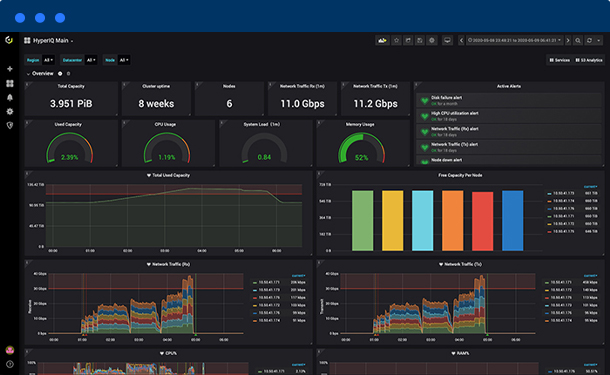
Cloudian HyperStore is a software-defined object storage platform that runs on industry-standard hardware, available as Cloudian appliances or as software on servers you choose. It uses a modular, peer-to-peer architecture that expands without disruption, letting a cluster start small and grow to exabyte scale by adding nodes.
Data can sit at one site or be distributed across multiple sites and public cloud, managed as a single system through one flat S3 namespace. The platform handles both object and file data and reports CAPEX savings of up to 70% compared with proprietary tier-one storage.
Key features include:
How it meets the criteria:
| Criterion | Solution Fit | Key Considerations |
| S3 API compatibility | Provides broad compatibility with the AWS S3 API and SDK, enabling integration with cloud-native applications and existing S3-based workflows. | Verify compatibility with any advanced or application-specific S3 features required by your environment. |
| Erasure coding and replication options | Supports configurable per-bucket erasure coding and replication, allowing organizations to balance durability, performance, and storage efficiency. | Choose protection policies based on workload requirements, latency objectives, and disaster recovery goals. |
| Lifecycle and tiering policies | Supports S3 lifecycle management to automate object retention and data movement while simplifying long-term storage administration. | Review available lifecycle capabilities if complex tiering or archival workflows are required. |
| Object lock and immutability | Provides Object Lock, encryption, and security controls that help protect data from modification or deletion during defined retention periods. | Confirm retention policy configuration aligns with regulatory and compliance requirements. |
| Multi-tenancy and access controls | Supports secure multi-tenancy with IAM policies, RBAC, SAML, MFA, and encryption for tenant isolation and granular access management. | Well suited for organizations hosting multiple business units or customers on shared infrastructure. |
| Ransomware protection | Combines Object Lock, immutable storage, encryption, and strong authentication controls to reduce the risk of unauthorized data modification or deletion. | Pair with monitoring, backup, and incident response processes for a comprehensive ransomware strategy. |
| Cost analysis factors | Runs on industry-standard hardware and reports significant CAPEX savings compared with proprietary storage while supporting incremental capacity expansion. | Evaluate hardware, licensing, support, networking, and operational costs over the expected deployment lifecycle. |
| Deployment models | Available as software or integrated appliances, supporting on-premises, hybrid cloud, and multi-site deployments through a unified S3 namespace. | Best suited for organizations that want to retain infrastructure control while integrating with public cloud resources. |

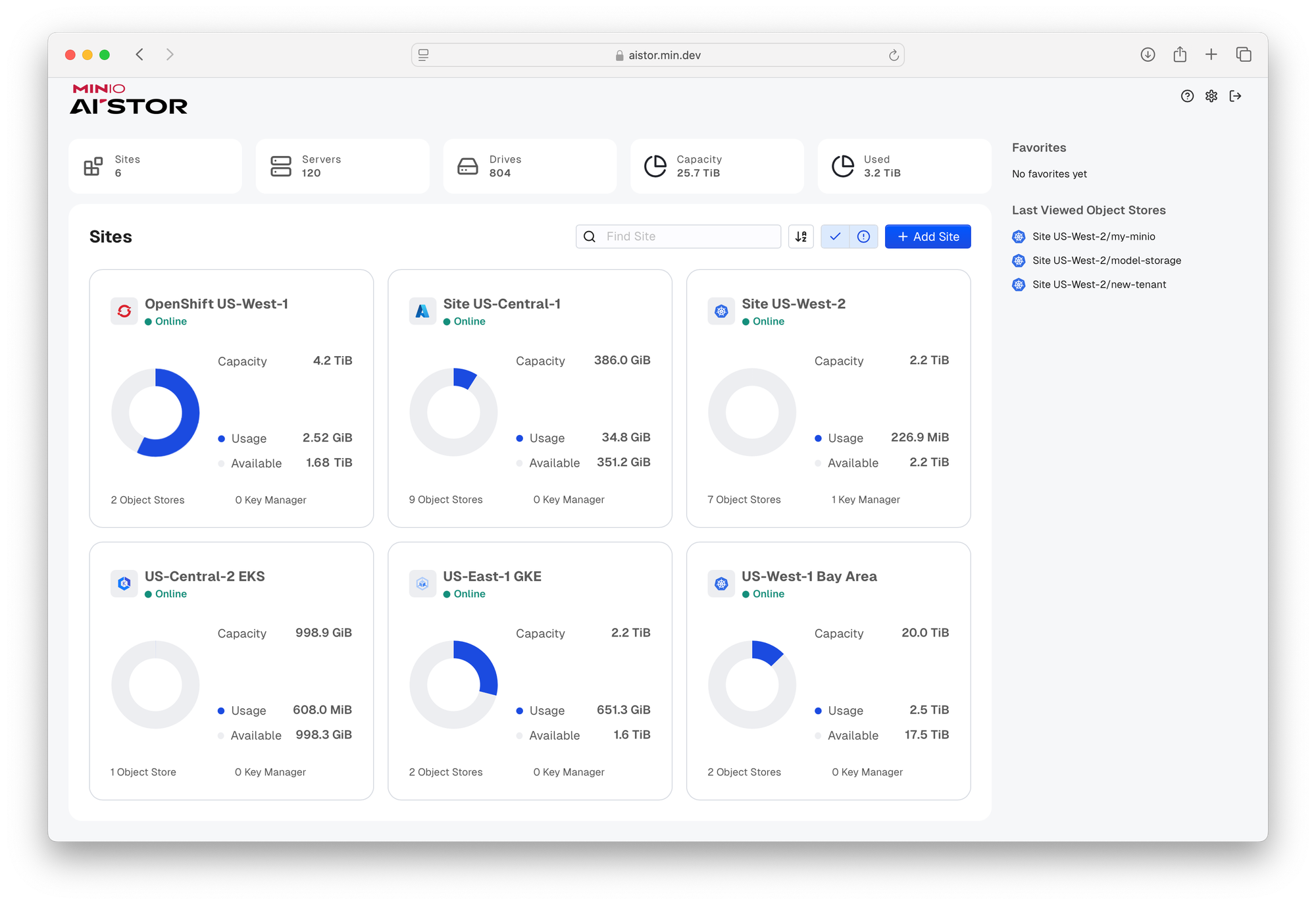
Best for: S3-compatible object storage for AI training, inference, and analytics at scale.
Strengths: Stateless architecture with no external metadata database and native S3 and Iceberg support.
Things to consider: Documentation gaps and administration effort are reported by self-supporting users.
MinIO AIStor is an object store with a native S3 API and a stateless architecture that removes the need for a separate metadata database. Objects and buckets are managed through the filesystem atomically, and metadata is distributed across the storage layer using the same erasure coding and bit-rot protection as the data.
The platform scales linearly from terabytes to exabytes by adding commodity hardware, without metadata rebalancing or database migrations. It supports the S3 and S3 Express protocols, an Iceberg catalog, SFTP, and Delta Sharing, and reports 99.999999999% durability with a single flat namespace across clusters, data centers, and clouds.
Key features include:
How it meets the criteria:
| Criterion | Solution Fit | Key Considerations |
| S3 API compatibility | Provides native support for the S3 and S3 Express APIs, enabling compatibility with cloud-native applications, AI frameworks, and existing S3 tools. | Strong choice for organizations standardizing on S3-compatible storage and modern data platforms. |
| Erasure coding and replication options | Uses distributed erasure coding with bit-rot protection, self-healing, and replication to provide high durability without a separate metadata database. | Evaluate replication policies based on recovery objectives and geographic distribution requirements. |
| Lifecycle and tiering policies | Supports lifecycle policies, object versioning, and replication to automate data management throughout the object lifecycle. | Review policy capabilities if advanced archival workflows or multiple storage tiers are required. |
| Object lock and immutability | Supports object immutability alongside encryption and compliance features to protect data from unauthorized modification or deletion. | Verify retention policy options and compliance requirements before deployment. |
| Multi-tenancy and access controls | Provides identity and access management, encryption through a key management server, and secure access controls for shared environments. | Confirm integration with existing identity providers and enterprise authentication systems. |
| Ransomware protection | Combines immutable objects, versioning, encryption, erasure coding, and self-healing capabilities to improve resilience against ransomware and data corruption. | Pair with backup, monitoring, and incident response processes for comprehensive ransomware protection. |
| Cost analysis factors | Scales on commodity hardware using a stateless architecture that eliminates external metadata databases, reducing infrastructure complexity and enabling incremental growth. | Organizations managing the platform themselves should account for administration, support, and operational costs. |
| Deployment models | Supports on-premises, hybrid cloud, and multi-cloud deployments with a single flat namespace across clusters and data centers. | Well suited for AI, analytics, and enterprise environments requiring flexible deployment and large-scale S3-compatible storage. |

Best for: Multi-petabyte to exabyte object and file storage spanning sites and clouds.
Strengths: Multidimensional scaling, 14-nines durability, and CORE5 cyber resilience.
Things to consider: High initial setup cost; best suited to very large deployments.
Scality RING is a software-defined object and file storage platform that runs on industry-standard x86 servers using a pay-as-you-grow model. It scales across capacity, performance, buckets, servers, sites, and clouds, and presents storage as a hybrid-cloud S3 namespace managed from a single system.
Data protection is handled through erasure coding, replication, and self-healing, and the platform reports up to 14-nines durability with 100% availability during failures, upgrades, and expansions. An all-flash configuration, RING XP, adds performance-oriented access modes for demanding workloads.
Key features include:
How it meets the criteria:
| Criterion | Solution Fit | Key Considerations |
| S3 API compatibility | Provides a hybrid-cloud S3 namespace with AWS S3 API compatibility, enabling integration with cloud-native applications and existing S3-based workflows. | Verify support for any specialized S3 features required by your applications or migration plans. |
| Erasure coding and replication options | Uses configurable erasure coding, replication, and self-healing to provide high durability and data availability across multiple sites and availability zones. | Select protection policies based on workload performance, capacity efficiency, and disaster recovery objectives. |
| Lifecycle and tiering policies | Supports policy-driven data management within a hybrid-cloud architecture, helping organizations manage data efficiently as storage grows. | Evaluate lifecycle and tiering capabilities if automated archival or multi-tier storage is a primary requirement. |
| Object lock and immutability | Supports S3 Object Lock, configurable retention policies, encryption, and immutable storage as part of its CORE5 cyber resilience framework. | Well suited for regulated environments that require WORM storage and long-term data retention. |
| Multi-tenancy and access controls | Provides AWS-compatible IAM, MFA, encryption, and secure administrative controls for managing multiple users and workloads. | Confirm tenant isolation and identity integration requirements for large shared deployments. |
| Ransomware protection | Combines immutable storage, Object Lock, encryption, self-healing, and CORE5 cyber resilience features to strengthen protection against ransomware and data tampering. | Integrate with enterprise backup, monitoring, and incident response processes for layered protection. |
| Cost analysis factors | Uses a pay-as-you-grow model on industry-standard x86 hardware, allowing organizations to expand capacity without replacing existing infrastructure. | Initial deployment costs can be significant, making the platform best suited for very large-scale environments where long-term scalability offsets upfront investment. |
| Deployment models | Supports on-premises, hybrid cloud, multi-site, and multi-cloud deployments through a unified S3 namespace spanning data centers and cloud environments. | Particularly well suited for enterprises requiring large-scale storage across geographically distributed locations. |
Best for: Exascale on-premises S3 object storage for AI model training and enterprise workloads.
Strengths: Kubernetes-native platform with a global namespace and HDD and all-flash appliances.
Things to consider: Higher cost; the interface and S3 coverage draw criticism.
Dell ObjectScale is an S3-compatible object storage platform built on a Kubernetes-native, scale-out architecture. It is available as a software update, as HDD and all-flash appliances, or as software-defined storage on Dell PowerEdge servers, building on the earlier Dell ECS codebase.
The platform scales to exabytes across a unified global namespace and offers two appliance families: the X560 for traditional workloads and AI data lakes, and the all-flash XF960 for AI training, checkpointing, analytics, and backup.
Key features include:
How it meets the criteria:
| Criterion | Solution Fit | Key Considerations |
| S3 API compatibility | Provides S3-compatible object storage with a global namespace, enabling integration with cloud-native applications and existing S3-based workflows. | Confirm compatibility with any advanced S3 features required by specific applications or third-party tools. |
| Erasure coding and replication options | Supports erasure coding, replication, and geo-distributed data protection to balance durability, performance, and storage efficiency across sites. | Select data protection policies based on resilience, recovery objectives, and workload performance requirements. |
| Lifecycle and tiering policies | Supports policy-based data management as part of its S3-compatible platform, helping automate long-term storage administration. | Review available lifecycle and tiering capabilities if complex archival or cost-optimization workflows are required. |
| Object lock and immutability | Provides ObjectLock WORM immutability alongside replication and erasure coding to protect retained data from modification or deletion. | Verify retention and compliance settings to ensure they meet regulatory requirements. |
| Multi-tenancy and access controls | Supports enterprise-scale environments through Kubernetes-native management and integration with the broader Dell storage ecosystem. | Evaluate identity integration, tenant isolation, and administrative controls based on organizational requirements. |
| Ransomware protection | Combines ObjectLock WORM protection, erasure coding, replication, and immutable storage capabilities to improve resilience against ransomware and accidental data loss. | Pair with backup, monitoring, and incident response processes for a comprehensive ransomware protection strategy. |
| Cost analysis factors | Available as software-defined storage or dedicated HDD and all-flash appliances, allowing organizations to choose deployment models that align with performance and budget requirements. | Higher acquisition costs may be justified for organizations requiring AI performance, enterprise support, and exascale scalability. |
| Deployment models | Supports software-defined, appliance-based, on-premises, hybrid cloud, Kubernetes-native, and multi-site deployments with a unified global namespace. | Well suited for enterprises building large-scale AI data lakes or modernizing on-premises object storage while maintaining cloud integration. |

Best for: On-premises petabyte-to-exabyte object storage with strong data dispersal.
Strengths: Patented erasure coding (IDA), S3 Object Lock WORM, and geo-dispersed protection.
Things to consider: Costs and retrieval speed can be unpredictable.
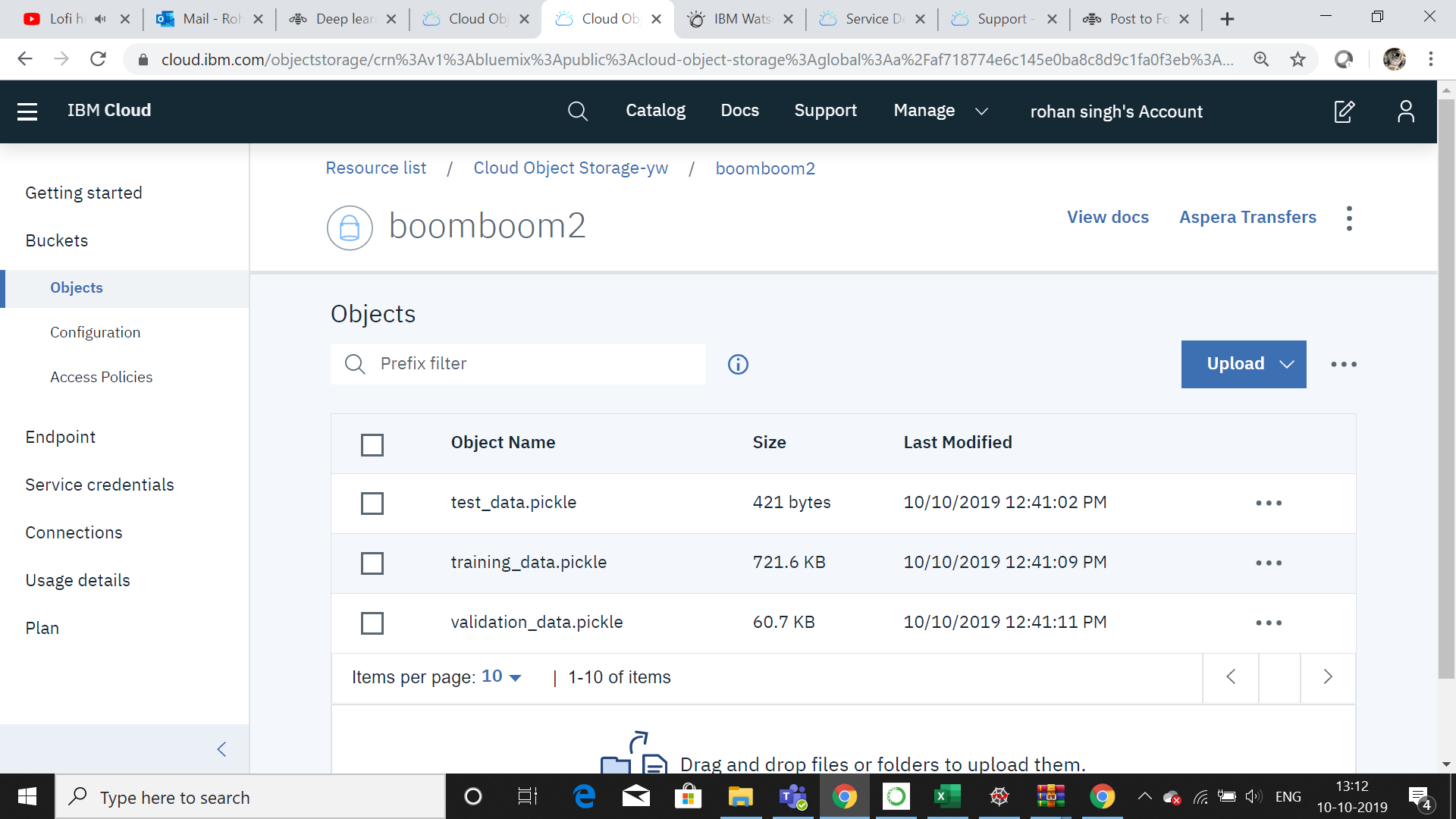
IBM Cloud Object Storage is a software-defined, hyperscale storage platform that runs on premises and integrates with data at the edge, in the data center, or in the cloud. It is available as software or as an appliance and scales in performance and capacity from terabytes to exabytes.
The platform reports up to 99.9999% availability and high durability, using local or geo-dispersed erasure coding through its dsNet software and patented information dispersal algorithm. This approach uses erasure coding rather than replication to support availability across sites.
Key features include:
How it meets the criteria:
| Criterion | Solution Fit | Key Considerations |
| S3 API compatibility | Provides S3-compatible object storage alongside SMB and NFS access, allowing integration with cloud-native applications while supporting traditional file-based workloads. | Verify compatibility with any advanced S3 features required by existing applications and workflows. |
| Erasure coding and replication options | Uses its patented Information Dispersal Algorithm (IDA) and dsNet software to distribute erasure-coded data across local or geo-dispersed sites, reducing storage overhead while maintaining high durability. | The platform emphasizes erasure coding over replication, so evaluate data protection policies based on recovery objectives and deployment requirements. |
| Lifecycle and tiering policies | Supports policy-based object expiration and lifecycle management to automate retention and long-term storage administration. | Review available lifecycle capabilities if advanced storage tiering or archival workflows are required. |
| Object lock and immutability | Combines S3 Object Lock, SecureSlice, WORM functionality, and configurable retention policies to protect data from modification or deletion. | Well suited for regulated environments that require immutable storage and long-term retention controls. |
| Multi-tenancy and access controls | Provides storage vaults, retention policies, and support for object and file access, enabling secure management of multiple workloads and users. | Evaluate identity integration and administrative controls based on enterprise governance requirements. |
| Ransomware protection | Uses immutable WORM storage, Object Lock, erasure coding, and automated recovery features to strengthen resilience against ransomware and accidental data loss. | Pair with security monitoring, backup, and incident response processes for comprehensive ransomware protection. |
| Cost analysis factors | Available as software or integrated appliances, allowing organizations to scale from terabytes to exabytes while reducing storage overhead through erasure coding. | Consider appliance, software, support, networking, and retrieval costs when evaluating long-term total cost of ownership. |
| Deployment models | Supports on-premises deployments with integration across edge locations, data centers, and cloud environments, making it suitable for hybrid storage architectures. | Best suited for organizations requiring large-scale, geo-dispersed object storage while maintaining control over infrastructure. |
Best for: Managed cloud object storage for data lakes, AI, and analytics.
Strengths: 11-nines durability, many storage classes, and integration across AWS.
Things to consider: Pricing and IAM permission complexity.
Amazon Simple Storage Service (S3) is a managed object storage service that stores data up to exabyte scale. It is elastic, growing and shrinking automatically with no capacity provisioning, and customers pay only for what they use. S3 is encrypted by default and offers auditing capabilities to monitor access.
The service provides multiple storage classes with lifecycle management and supports open table formats such as Apache Iceberg. Additional classes and features address performance-intensive and AI workloads.
Key features include:
How it meets the criteria:
| Criterion | Solution Fit | Key Considerations |
| S3 API compatibility | As the reference implementation of the S3 API, Amazon S3 provides the broadest compatibility with cloud-native applications, SDKs, backup software, analytics platforms, and AI services. | Ideal for organizations building or migrating applications around the S3 ecosystem. |
| Erasure coding and replication options | Delivers high durability through AWS-managed storage architecture while supporting same-Region and cross-Region replication for business continuity and disaster recovery. | Configure replication policies based on recovery objectives, compliance requirements, and data residency needs. |
| Lifecycle and tiering policies | Provides automated lifecycle management across multiple storage classes, including Glacier tiers, allowing data to transition automatically based on age or access patterns. | Well suited for optimizing storage costs as data volumes grow over time. |
| Object lock and immutability | Supports S3 Object Lock, versioning, encryption, and retention policies to protect objects from accidental or malicious modification or deletion. | Verify retention settings and legal hold requirements for regulated workloads. |
| Multi-tenancy and access controls | Offers granular IAM policies, bucket policies, access points, encryption, and auditing to securely manage users, applications, and shared storage environments. | IAM configuration can become complex in large AWS environments and should be carefully governed. |
| Ransomware protection | Combines Object Lock, versioning, encryption by default, replication, and AWS Backup integration to improve resilience against ransomware and accidental data loss. | Organizations should also implement least-privilege access, monitoring, and backup best practices for comprehensive protection. |
| Cost analysis factors | Uses consumption-based pricing with multiple storage classes, allowing organizations to align storage costs with access frequency and performance requirements. | Evaluate storage, API requests, data retrieval, replication, and data transfer costs when estimating long-term total cost of ownership. |
| Deployment models | Fully managed public cloud service that integrates with AWS services while supporting hybrid architectures through AWS storage, networking, and migration services. | Best suited for organizations seeking elastic scalability without managing storage infrastructure, while considering cloud connectivity and data sovereignty requirements. |

Best for: Cloud object storage for cloud-native workloads, archives, data lakes, HPC, and ML.
Strengths: Multiple storage tiers, Entra ID and RBAC security, and Data Lake Gen2 support.
Things to consider: Pricing tiers and access-control setup involve a learning curve.
Azure Blob Storage is Microsoft’s cloud object storage service for unstructured data across cloud-native applications, archives, data lakes, high-performance computing, and machine learning. It supports common development frameworks including Java, .NET, Python, and Node.js and can serve as a foundation for serverless architectures such as Azure Functions.
The service offers multiple storage tiers with lifecycle management and provides a premium SSD-based object tier for low-latency scenarios. It extends into analytics through Azure Data Lake Storage Gen2, which adds a hierarchical file system and multi-protocol access.
Key features include:
How it meets the criteria:
| Criterion | Solution Fit | Key Considerations |
| S3 API compatibility | Azure Blob Storage provides native Azure Blob APIs and supports S3-compatible access through selected interoperability options and third-party gateways rather than as its primary interface. | Organizations migrating S3-based applications should verify compatibility requirements and any necessary translation layers. |
| Erasure coding and replication options | Provides multiple redundancy options, including locally redundant, zone-redundant, geo-redundant, and geo-zone-redundant storage to improve durability and availability. | Select the appropriate replication model based on recovery objectives, compliance requirements, and cost considerations. |
| Lifecycle and tiering policies | Supports automated lifecycle management across Premium, Hot, Cool, Cold, and Archive tiers, allowing data to move between storage classes based on defined policies. | Well suited for optimizing long-term storage costs across large data sets. |
| Object lock and immutability | Supports immutable WORM storage, retention policies, encryption, and versioning to protect data from modification or deletion. | Review retention and legal hold requirements to ensure they align with regulatory obligations. |
| Multi-tenancy and access controls | Integrates with Microsoft Entra ID, RBAC, policy-based access controls, encryption, and auditing to secure shared storage environments. | Well suited for organizations already using the Microsoft identity and security ecosystem. |
| Ransomware protection | Combines immutable storage, encryption, versioning, replication, and Microsoft threat protection capabilities to strengthen resilience against ransomware attacks. | Pair with backup, monitoring, and incident response processes for comprehensive protection. |
| Cost analysis factors | Consumption-based pricing, multiple storage tiers, and lifecycle automation help organizations balance performance and storage costs as data grows. | Evaluate storage capacity, transactions, data retrieval, replication, and network egress charges when estimating long-term costs. |
| Deployment models | Fully managed cloud storage service that supports cloud-native, hybrid cloud, and edge scenarios through integration with the broader Microsoft Azure platform. | Best suited for organizations invested in Azure services or building data lakes, AI, and analytics workloads within the Microsoft ecosystem. |
Best for: Managed object storage integrated with Google analytics and AI tools.
Strengths: Autoclass tiering, multi-region replication, and BigQuery integration.
Things to consider: Billing visibility and setup options can overwhelm new users.
Google Cloud Storage is a managed service for storing unstructured data, allowing customers to store any amount of data and retrieve it as needed. It organizes data into buckets and offers four storage classes: Standard, Nearline, Coldline, and Archive, with policy-based transitions between them.
The service integrates with Google’s analytics and AI tools and provides continental-scale replication options for high availability.
Key features include:
How it meets the criteria:
| Criterion | Solution Fit | Key Considerations |
| S3 API compatibility | Provides a native Google Cloud Storage API with interoperability options for S3-compatible tools and migration workflows. | Organizations relying heavily on S3-specific APIs should verify compatibility for their applications and automation tools. |
| Erasure coding and replication options | Delivers high durability through Google-managed storage infrastructure with dual-region and multi-region replication options backed by defined RPO and RTO SLAs. | Select replication configurations based on availability, latency, compliance, and geographic requirements. |
| Lifecycle and tiering policies | Supports Object Lifecycle Management and Autoclass to automatically transition objects between Standard, Nearline, Coldline, and Archive storage classes. | Automatic tiering helps reduce long-term storage costs for infrequently accessed data. |
| Object lock and immutability | Supports Bucket Lock, retention policies, object versioning, encryption, and customer-managed encryption keys to protect critical data. | Verify retention policies and compliance settings for regulated workloads. |
| Multi-tenancy and access controls | Provides IAM permissions, audit logging, encryption, and granular access controls for securely managing shared cloud storage environments. | Organizations should design IAM policies carefully to enforce least-privilege access across teams and applications. |
| Ransomware protection | Combines Bucket Lock, object versioning, retention policies, encryption, and audit logging to improve resilience against ransomware and accidental data deletion. | Pair with backup, monitoring, and incident response processes for comprehensive ransomware protection. |
| Cost analysis factors | Consumption-based pricing, multiple storage classes, and Autoclass help optimize storage costs as data access patterns change over time. | Evaluate storage, operations, data retrieval, network egress, and replication costs when estimating long-term total cost of ownership. |
| Deployment models | Fully managed cloud object storage that supports public cloud, hybrid cloud, and multi-cloud architectures through Google’s storage and data management ecosystem. | Best suited for organizations building analytics, AI, and cloud-native applications within or alongside Google Cloud services. |
Petabyte-scale object storage provides the scalability, durability, and operational efficiency needed to manage rapidly growing volumes of unstructured data. The right platform should combine strong S3 compatibility, flexible data protection through erasure coding and replication, automated lifecycle management, robust security controls, and predictable long-term costs. Evaluating these capabilities alongside performance requirements, deployment preferences, and future growth plans helps organizations build a storage environment that remains resilient, cost-effective, and easy to scale as data volumes continue to increase.
See Cloudian first in Google Search

