


What Are AI Storage Providers?
AI storage providers offer infrastructure and solutions optimized for managing the massive volumes of data required for AI workloads. Unlike traditional storage systems, these solutions are designed to handle complex and varied data sets, such as structured data, unstructured data like images, videos, and audio, and semi-structured data like JSON or XML. They are engineered to support high-speed data access and scalability for AI training and inference.
Such providers focus on meeting the demanding requirements of AI workflows by enabling data availability, which is critical for processing large training models and real-time AI tasks. Many deploy advanced data management features such as replication, snapshots, and tiered storage to ensure data integrity and accessibility while reducing costs by optimizing resource usage.
Editor’s note: Updated the article to cover recent AI storage market trends and update information for AI storage providers to reflect features and capabilities in 2026.
This is part of a series of articles about AI infrastructure
In this article:
- Key Requirements for AI Storage Solutions
- Notable AI Storage Providers
- Evaluation Criteria for Selecting AI Storage Providers
AI Storage Market Trends
AI Powered Storage Market Growth
The AI storage market is expanding rapidly as organizations generate and process increasing volumes of data. The market is valued at USD 35.95 billion and expected to reach approximately USD 255.24 billion by 2034, representing a compound annual growth rate (CAGR) of 24.42%.
This growth is largely driven by the need to manage large enterprise datasets produced by AI and machine learning applications. These workloads require scalable storage, fast data access, and systems capable of handling high-volume data processing.
Growth of Cloud Data and AI Workloads
The rapid expansion of cloud computing is another major trend shaping AI storage demand. Cloud storage capacity is projected to increase by around 100 zettabytes, and about 60% of organizational data is already stored in cloud environments. By 2025, nearly 200 zettabytes of data are expected to be stored in the cloud.
At the same time, many organizations rely on multiple cloud providers. Over half of consumers use three different cloud services, while platforms such as Google Drive and Dropbox have hundreds of millions to over a billion users. This widespread cloud adoption increases the need for scalable storage platforms capable of supporting AI data pipelines.
Emerging AI Capabilities Built Into Storage Solutions
AI technologies are increasingly embedded directly into storage platforms. These capabilities allow systems to automate tasks such as capacity scaling, data tiering, and performance optimization. Machine learning models can also analyze storage usage patterns to forecast demand and optimize data placement before performance issues occur.
AI-driven storage platforms also enhance security. They can detect anomalies, identify potential cyber threats in real time, and reduce the risk of data leaks. These automated management and security capabilities are becoming important features as organizations deploy large-scale AI workloads.
Key Requirements for AI Storage Solutions
High Throughput and Low Latency
AI workloads include training neural networks and serving AI in real time. AI models often process vast amounts of data in parallel across multiple GPUs or CPUs, requiring storage solutions that can deliver data at high rates without bottlenecks. A slow storage pipeline can lead to increased model training times, negatively affecting productivity and costs.
Low latency is just as important, especially for inference tasks where near-instantaneous responses are critical. For example, applications in autonomous vehicles or edge-based AI rely on real-time data reads and writes. Optimized input/output handling, parallel file systems, and NVMe storage technologies are often employed to meet these performance demands.
Linear Scalability to Exabytes
AI workloads already process massive amounts of data, and with the advent of AI reasoning, that volume is poised to grow exponentially. Storage systems must allow for flexible growth in both capacity and throughput to enable AI workflows to retain the historical data needed to accelerate and enhance reasoning over time.
Data Management Features
An AI storage system must include advanced data management functionalities to support the end-to-end AI lifecycle. Features like automated data tiering allow for the efficient allocation of data to the most cost-effective or performance-oriented storage tiers. This ensures that hot data is stored on high-speed media, while cold data is archived cost-effectively.
Additional capabilities like snapshotting, and mirroring or erasure coding increase data availability and protect against corruption. Backup and disaster recovery systems are equally important, to minimize downtime in case of storage failures. Such features help teams focus on advancing AI objectives rather than dealing with data logistics.
Support for Diverse Data Types
AI models require enormous and varied datasets, encompassing types such as text, images, video, and even sensor data. An effective AI storage provider must support these diverse data formats while ensuring seamless data availability for training and inference. Compatibility with various file systems, object storage protocols, and APIs is key to achieving this.
Multi-tier storage support for structured (databases), unstructured (media files), and semi-structured (logs) data ensures organizations can centralize data on a unified platform. Consolidating diverse data sources also simplifies workflows, cutting down on the need for format conversions or data preprocessing.
Integration with AI Frameworks
A competent AI storage platform integrates effortlessly with popular AI frameworks like TensorFlow, PyTorch, and scikit-learn. Direct integration minimizes the complexity of deploying data pipelines while improving efficiency. For example, native support for AI frameworks reduces time wasted in connecting incompatible technologies or creating custom data management layers.
Additionally, integration with containerization and orchestration technologies like Kubernetes or Docker allows teams to scale their AI solutions dynamically. This connection ensures that storage solutions seamlessly complement the evolving needs of AI environments, avoiding vendor lock-in and enabling system flexibility.
Notable AI Storage Providers
1. Cloudian

Cloudian HyperStore is an AI-ready object storage platform for large-scale, data-intensive AI workloads. Built to manage unstructured data at exabyte scale, it provides high-throughput, low-latency performance through a distributed architecture optimized for AI training and inference.
Key features:
- AI-ready performance: Achieves 200 GiB/s read throughput on a modest 6-node cluster (12U total). This object storage performance translates to nearly 35 GiB/s per storage node.
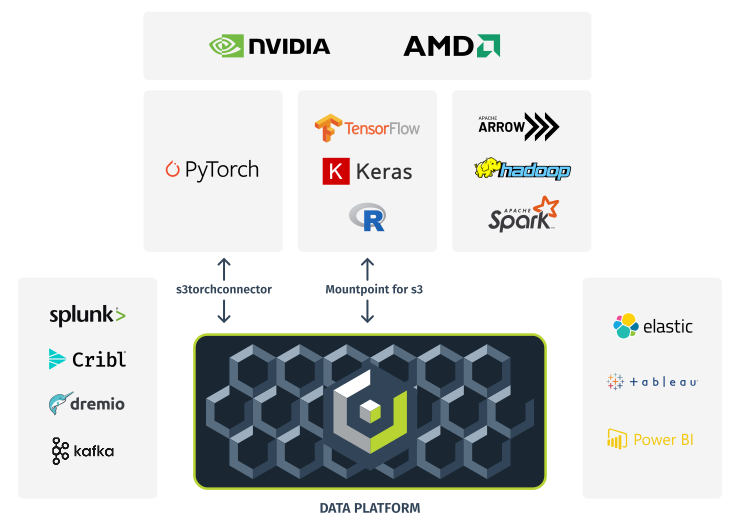
- Integration with AI ecosystems: Supports data-centric AI applications with a distributed architecture that allows thousands of concurrent operations and integrates with RDMA for S3 and works with leading ML frameworks like TensorFlow, PyTorch, and Spark ML, enabling direct parallel training from object storage.
- Scalable object storage: Offers limitless scalability through a modular, non-disruptive expansion model. Enables unified management across geographically distributed sites, supporting AI data growth without re-architecting infrastructure.
- S3 API compatibility: Delivers the industry’s highest level of compatibility with the AWS S3 API, ensuring seamless integration with cloud-native AI tools and services.
- Advanced data management: Offers rich metadata tagging, versioning, and HyperSearch for fast data discovery. Multi-tenancy and security features ensure secure, compliant storage for AI workloads.
2. IBM
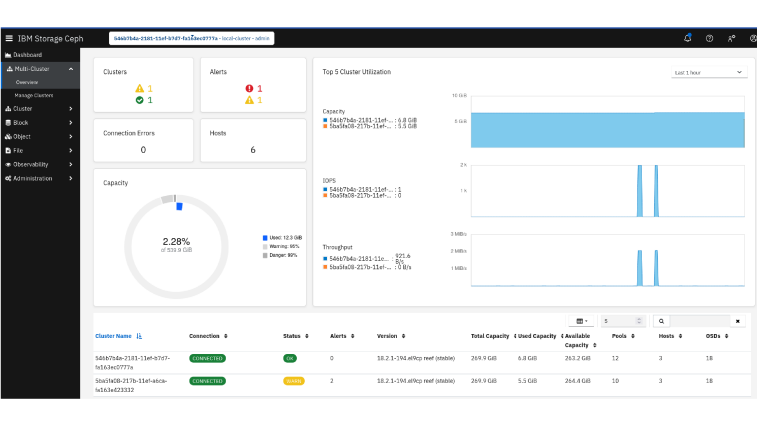
IBM provides storage solutions for AI, machine learning, and analytics workloads that require high performance and large-scale data management. Its storage platforms deliver scalable data access with low latency while consolidating multiple storage types into a single system. By combining file, block, and object storage services, IBM enables organizations to manage large datasets used in AI training and inference across cloud, on-premises, and edge environments.
Key features:
- Unified storage architecture: Combines file, block, and object storage services into a single platform to simplify data access and management.
- High performance and low latency: Delivers large-scale data throughput with minimal downtime to support AI training and inference workloads.
- Content-aware intelligence: Extracts semantic meaning from unstructured data, enabling AI systems to generate more relevant insights and responses.
- Software-defined scalability: Uses a scale-out architecture designed for AI, machine learning, and high-performance computing workloads.
- Flexible deployment environments: Supports deployment across edge, on-premises, and cloud infrastructure.
3. EverPure (Formerly Pure Storage)
Everpure (formerly PureStorage) provides a data platform to support AI workloads by consolidating data environments and simplifying storage management. The platform focuses on delivering high-performance data access and scalable infrastructure for AI data pipelines, training, and inference tasks. It enables organizations to manage data as a unified system while maintaining reliability and continuous availability.
Key features:
- Unified data platform: Consolidates data environments into a single virtual storage system with centralized control and policy-driven management.
- High reliability: Provides always-on operations with architectures designed to minimize downtime and maintain consistent access to data.
- Flexible scalability: Allows storage capacity and performance to expand as workloads grow through service-based deployment models.
- Automated data management: Uses automated controls and policies to manage storage resources efficiently across environments.
- Efficient infrastructure utilization: Improves data center efficiency by reducing energy use and operational overhead associated with traditional storage systems.

4. VAST Data
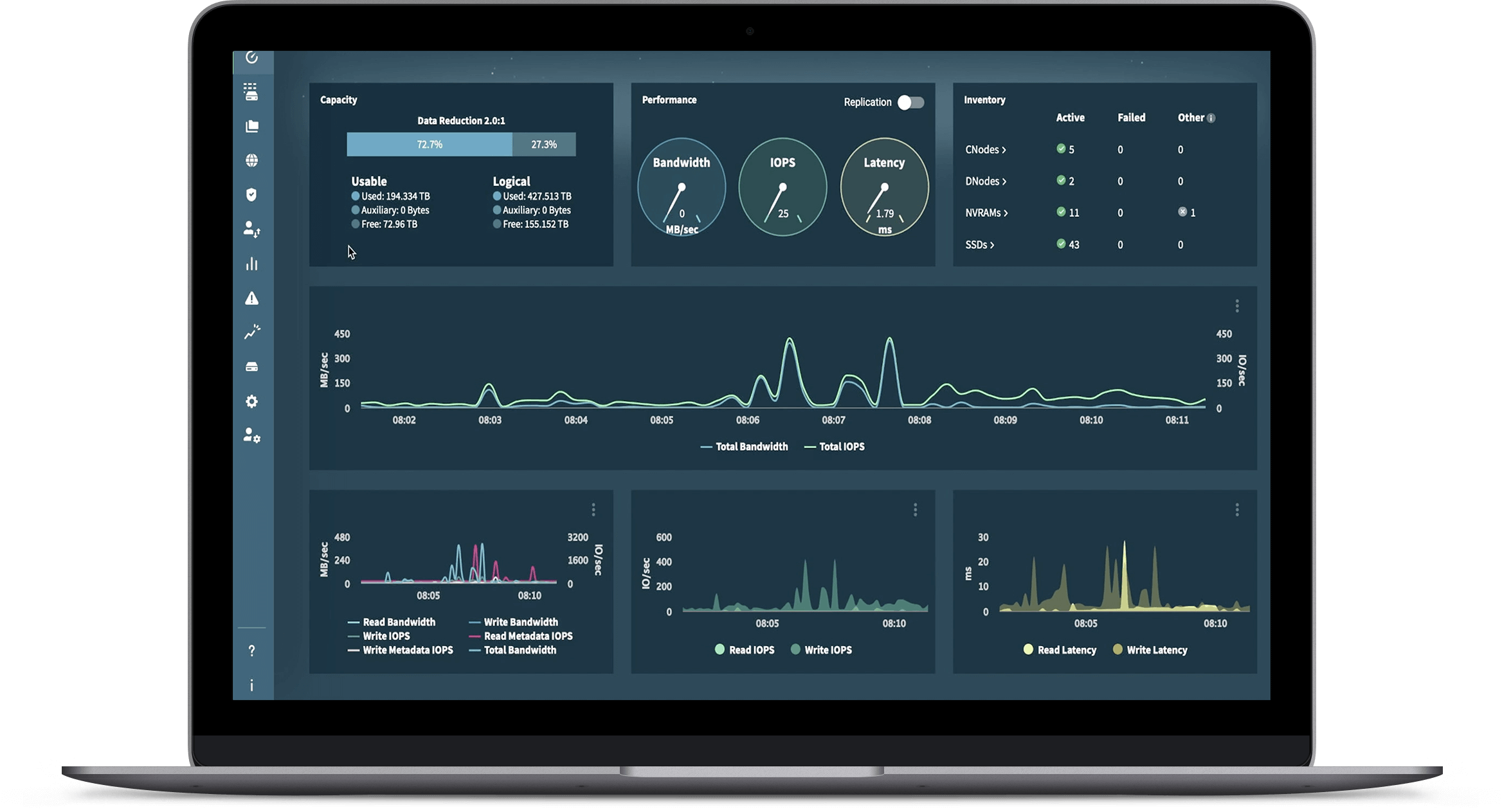
VAST Data offers a unified data platform that supports large-scale AI workloads by combining storage, data services, and orchestration within a single architecture. Its platform consolidates different types of data, including files, objects, tables, and streams, into a global namespace. This architecture enables organizations to process and analyze large datasets efficiently while supporting AI pipelines across distributed environments.
Key features:
- Unified data platform: Consolidates files, objects, tables, vectors, streams, and metadata within a single global namespace.
- Integrated AI data services: Provides built-in components for data storage, orchestration, and real-time processing to support AI workflows.
- Global data fabric: Enables data access across cloud, edge, and on-premises environments through a distributed namespace that scales to exabytes.
- Event-driven processing: Supports serverless data processing triggered by events, enabling automated data pipelines and real-time workflows.
- AI-native database capabilities: Includes services for managing structured data, vectors, logs, and contextual metadata used in AI applications.
5. Dell

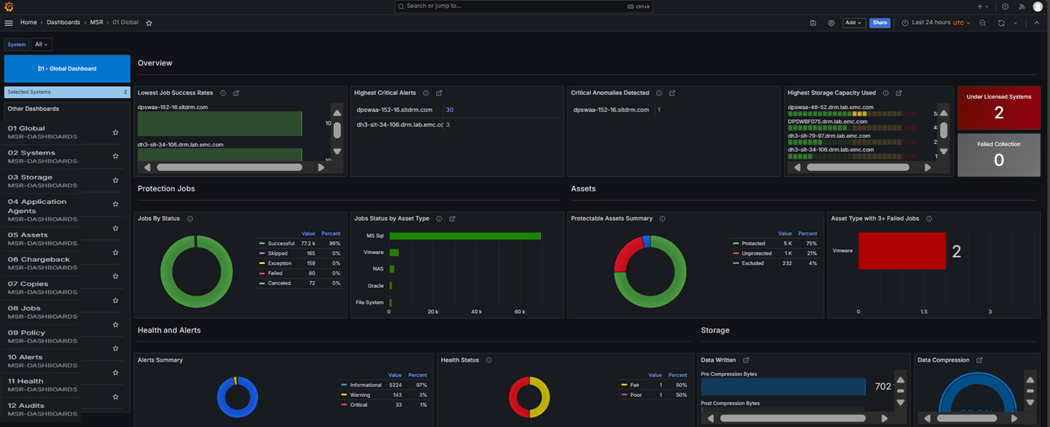
Dell provides an AI data platform that supports large-scale data ingestion, processing, and storage for AI workloads. The platform integrates storage systems such as PowerScale and ObjectScale with data management tools to unify access to structured, semi-structured, and unstructured data. This architecture enables organizations to prepare data for analytics and AI model training while maintaining security and operational efficiency.
Key features:
- Unified data architecture: Integrates storage engines and data management tools to support structured, semi-structured, and unstructured datasets.
- Scalable data ingestion: Aggregates data from distributed sources into centralized storage optimized for AI workloads.
- Integrated data processing: Prepares and organizes data for analytics, AI model training, and real-time decision-making.
- Cyber resilience and security: Includes encryption, access control, and data isolation features to protect sensitive information.
- Support for hybrid environments: Combines file and object storage capabilities to enable deployment across on-premises and cloud environments.
Evaluation Criteria for Selecting AI Storage Providers
Choosing the right AI storage provider is crucial to supporting scalable, high-performance AI initiatives. The selection should be guided by both technical capabilities and operational requirements. Here are key considerations:
- Performance benchmarks: Evaluate read/write throughput, IOPS, and latency under real AI workload simulations. Look for published data measured with industry-standard benchmarks. Or, conduct proofs-of-concept using carefully collected data and models to confirm performance claims.
- Scalability and flexibility: Ensure the solution can scale on both performance and capacity without major re-architecture. The ability to add nodes or storage capacity on demand is vital for growing datasets and increasing model complexity.
- Compatibility with AI tools and workflows: Confirm seamless integration with machine learning frameworks (e.g., TensorFlow, PyTorch), container platforms (Kubernetes, Docker), and orchestration tools. Native support for these tools reduces operational friction and setup time. A native S3 API ensures compatibility with the most common API used by these tools.
- Data management and automation: Prioritize systems with automated tiering, snapshotting/versioning, and lifecycle management. These features reduce manual intervention and help manage costs by optimizing storage allocation across hot, warm, and cold data.
- Multi-protocol and multi-cloud support: Look for support for NFS, SMB protocols, and native S3 API support to enable integration with diverse applications. Hybrid deployment options provide flexibility in aligning storage with compute resources.
- Security and compliance: The platform should offer encryption at rest and in transit, fine-grained access controls, and compliance with industry standards. Secure data handling is especially important in regulated industries.
- Vendor ecosystem and support: Evaluate the provider’s ecosystem of partners, certifications, and customer references. Reliable support, including 24/7 availability and proactive monitoring tools, is critical for production environments.
- Total cost of ownership (TCO): Factor in not just upfront costs but also operational expenses, scalability-related charges, and potential vendor lock-in. Transparent pricing models and flexible licensing can significantly impact long-term value.
Conclusion
As AI workloads grow in scale and complexity, the importance of purpose-built storage solutions continues to rise. An effective AI storage system must deliver high-speed access, support for diverse data types, seamless integration with AI pipelines, and data management capabilities. Selecting the right storage infrastructure is essential for optimizing model training and inference.


