


Request a Demo
Join a 30 minute demo with a Cloudian expert.
Long-term AI data retention storage systems are specialized, high-capacity, and cost-effective infrastructures designed to store massive, inactive datasets (such as raw training inputs, historical model versions, and compliance logs) for extended periods. As AI data grows exponentially, organizations are moving away from traditional, expensive, high-performance storage toward tiered, “cold,” or active archive solutions that prioritize durability, security, and lower cost-per-terabyte over immediate, low-latency access.
Key technologies for long-term AI storage:
This is part of a series of articles about AI infrastructure
In this article:
Long-term retention enables reliable and scalable AI systems. As AI models evolve, the ability to revisit historical data becomes essential for performance improvements, compliance, and traceability. Below are key reasons why long-term data retention is critical for modern AI workloads:
Object storage is a popular architecture for AI data retention, built to handle vast datasets of unstructured information such as images, video, logs, and sensor streams. It uses a flat namespace with unique identifiers and metadata for each object, making data easy to categorize, search, and retrieve.
Object storage is inherently scalable, allowing for petabyte-scale capacity across distributed nodes, which suits the ever-expanding datasets typical in AI training and inference workflows. Another advantage of object storage is its support for data immutability and multi-region redundancy, which are crucial for long-term preservation and disaster recovery. Most object storage systems integrate with cloud services, simplifying archiving and ensuring global access.
Active archives bridge the gap between traditional backup and instant-access storage. These systems leverage hierarchical storage management (HSM) to dynamically move infrequently accessed data to cost-effective, slower storage tiers such as tape or cloud, while ensuring that retrieved data remains readily accessible when needed.
This approach optimizes storage expenses without sacrificing data availability for AI workflows that require periodic access to historical information. Active archiving supports evolving compliance demands by maintaining retrieval-friendly cataloging and metadata layers. The system tracks data location, version history, and access controls, simplifying processes for audits or retrospective AI model analysis.
Mass-capacity hard disk drives (HDDs) are a foundational component in long-term AI storage infrastructure, especially for environments dealing with terabytes to petabytes of operational and archival data. Modern mass-capacity HDDs offer high areal density, achieved through technologies like shingled magnetic recording (SMR) and energy-assisted magnetic recording, enabling more data per drive without steeply increasing costs.
These drives are favored in data centers and private clouds that stress direct access, predictability, and persistence. HDD-based systems remain relevant for their balance of price per terabyte and performance that satisfies AI data lakes and batch analytics tasks. Their improved energy efficiency and longevity further extend suitability for large-scale, long-term storage.
Tape storage remains a reliable and cost-effective option for very long-term, infrequently accessed AI data. Advances in linear tape-open (LTO) technology have increased capacity and lifespan, with media now rated for three decades of data retention. Tape systems offer air-gapped protection, boosting immunity against ransomware and cyber threats, useful for storing critical backups or regulatory archives of AI training data and model parameters.
While retrieval times from tape are slower compared to disks or flash, integration with active archiving systems and modern cataloging tools has reduced complexity. Enterprises increasingly use tape for cold storage of AI datasets, protecting against accidental deletion or corruption in online systems.
Blockchain-based storage implements decentralized networks to distribute, encrypt, and verify stored data, making it inherently tamper-evident and resistant to unauthorized changes. For long-term AI retention, this ensures a transparent, auditable history of data modifications, which is advantageous for regulated industries and scientific research that rely on immutable evidence of dataset integrity.
Blockchain storage can embed provenance trails directly into AI data, supporting explainability and audit compliance. Despite security and traceability benefits, blockchain storage solutions may face challenges in scalability and latency due to consensus protocols. However, when integrated with off-chain storage for large file payloads and on-chain metadata for verification, blockchain-based approaches can reinforce trust in AI model training datasets.
Read more in these guides to AI Storage and IOT Storage.

Cloudian HyperStore provides an exabyte-scalable, S3-compatible object storage platform optimized for the long-term retention and preservation of massive AI datasets. As enterprise AI initiatives mature, they require vast historical archives—including raw sensor telemetry, high-resolution media, and model checkpoints—to support continuous retraining and auditability. Cloudian allows organizations to build a highly durable, on-premises active archive that combines the instant accessibility of the cloud with the compelling economics of mass-capacity HDDs.
Data Provenance and Immutable “Gold Copies”
For long-term AI storage, maintaining a reliable audit trail and ensuring dataset integrity over years or decades is paramount. Cloudian utilizes S3 Object Lock to create immutable “gold copies” of original training data. This Write Once, Read Many (WORM) capability guarantees that historical records cannot be altered, overwritten, or encrypted by ransomware. This satisfies stringent regulatory compliance mandates and provides the verifiable data provenance necessary for explaining AI model outputs in regulated industries.
Predictable Economics vs. Hyperscaler Lock-in
Archiving petabytes of AI data in public clouds often leads to prohibitive retrieval fees and complex multi-year commitment models. By deploying Cloudian for long-term data retention, enterprises achieve predictable, flat-rate economics over standard 3-year to 5-year infrastructure lifecycles. This eliminates the variable egress costs associated with Tier 1 cloud providers, allowing data scientists to retrieve and analyze historical datasets as often as needed without financial penalty.
Key features include:

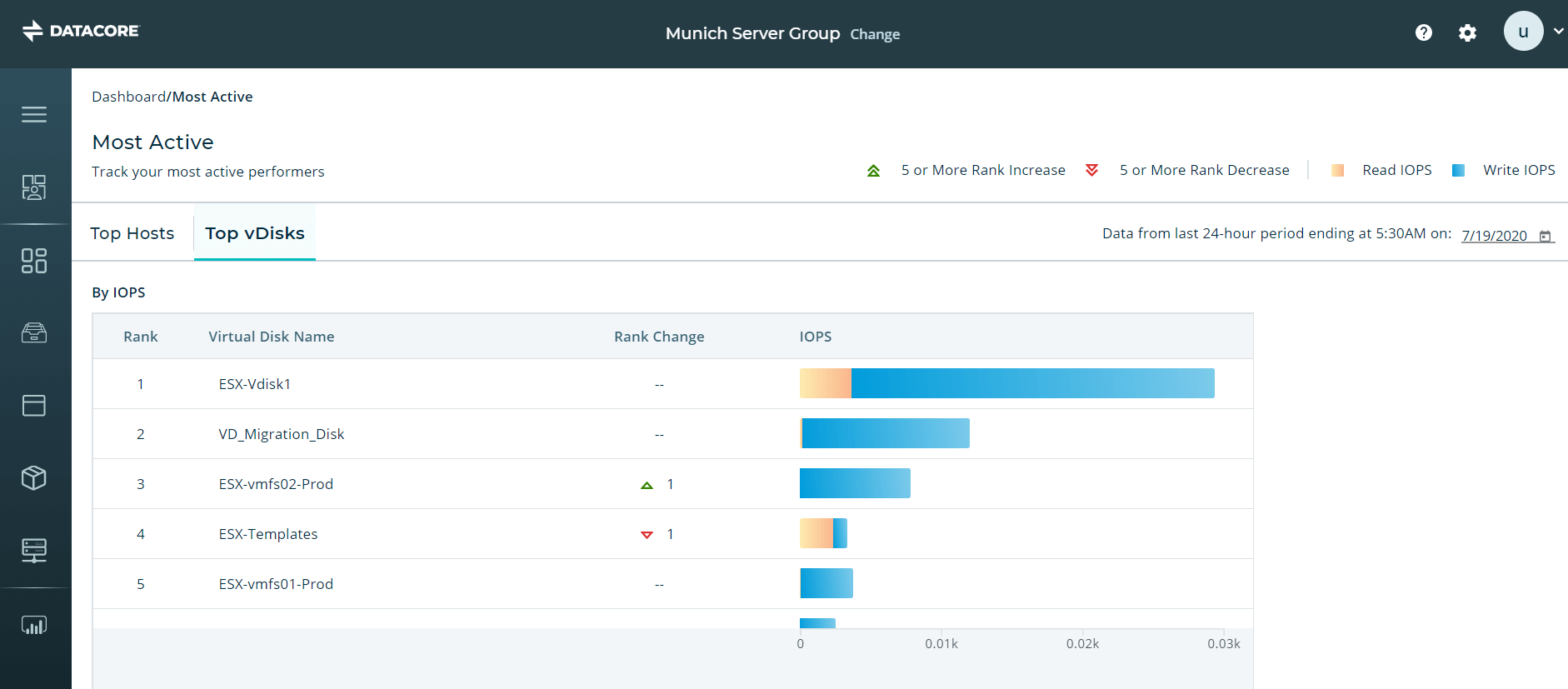
DataCore’s AI-enabled storage system automatically optimizes data placement across performance and capacity tiers, addressing the challenge of managing datasets with rapidly changing access requirements. It uses artificial intelligence and machine learning to analyze access patterns and dynamically move data between high-performance and cost-effective storage, without manual intervention.
Key features include:
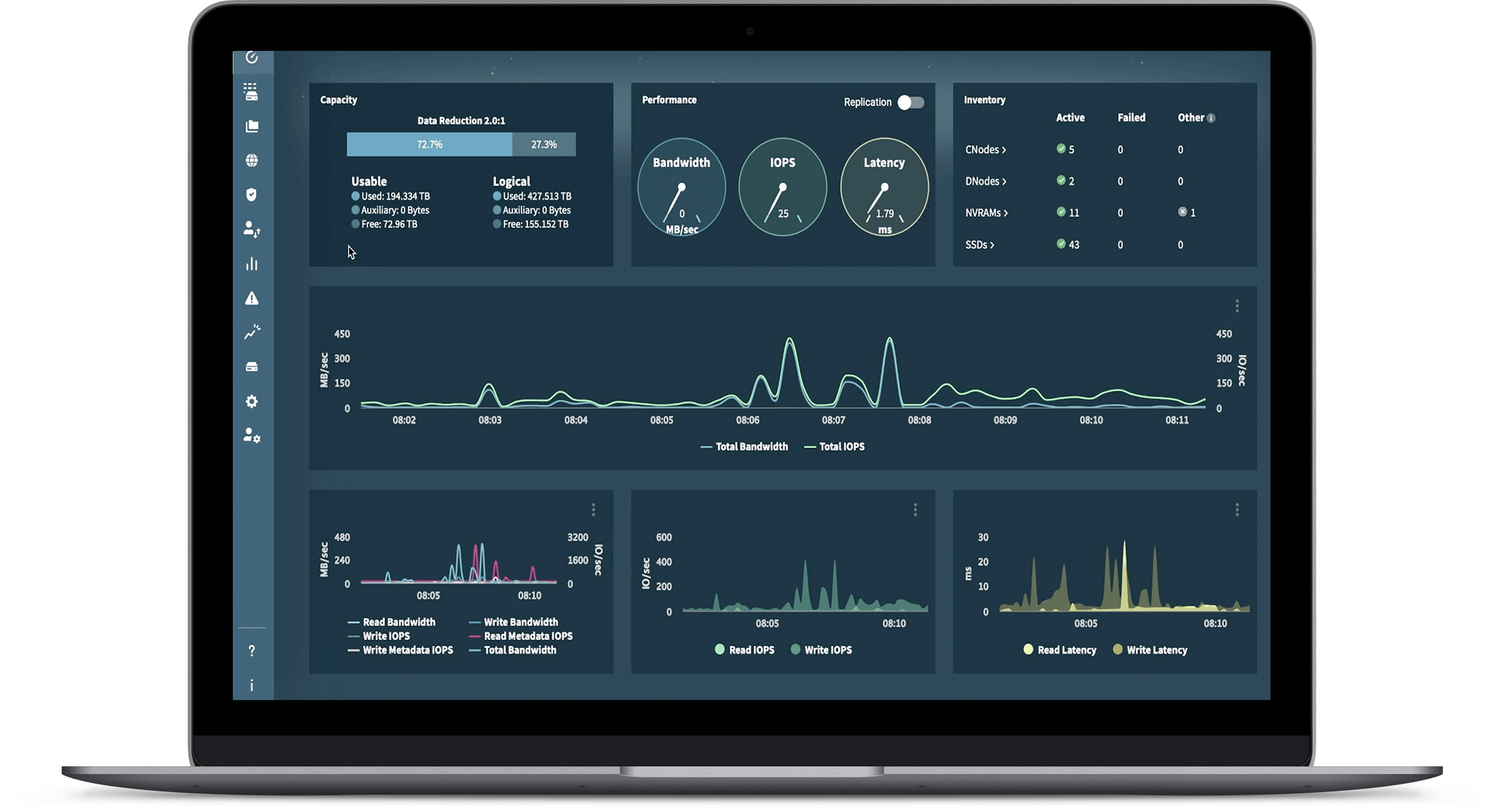
VAST Data delivers an AI-native storage platform built to meet the scale, speed, and complexity of AI workloads. By eliminating the limitations of traditional storage architectures, VAST unifies data into a single tier of high-performance flash, enabling seamless data access for training and inferencing across massive datasets.
Key features include:

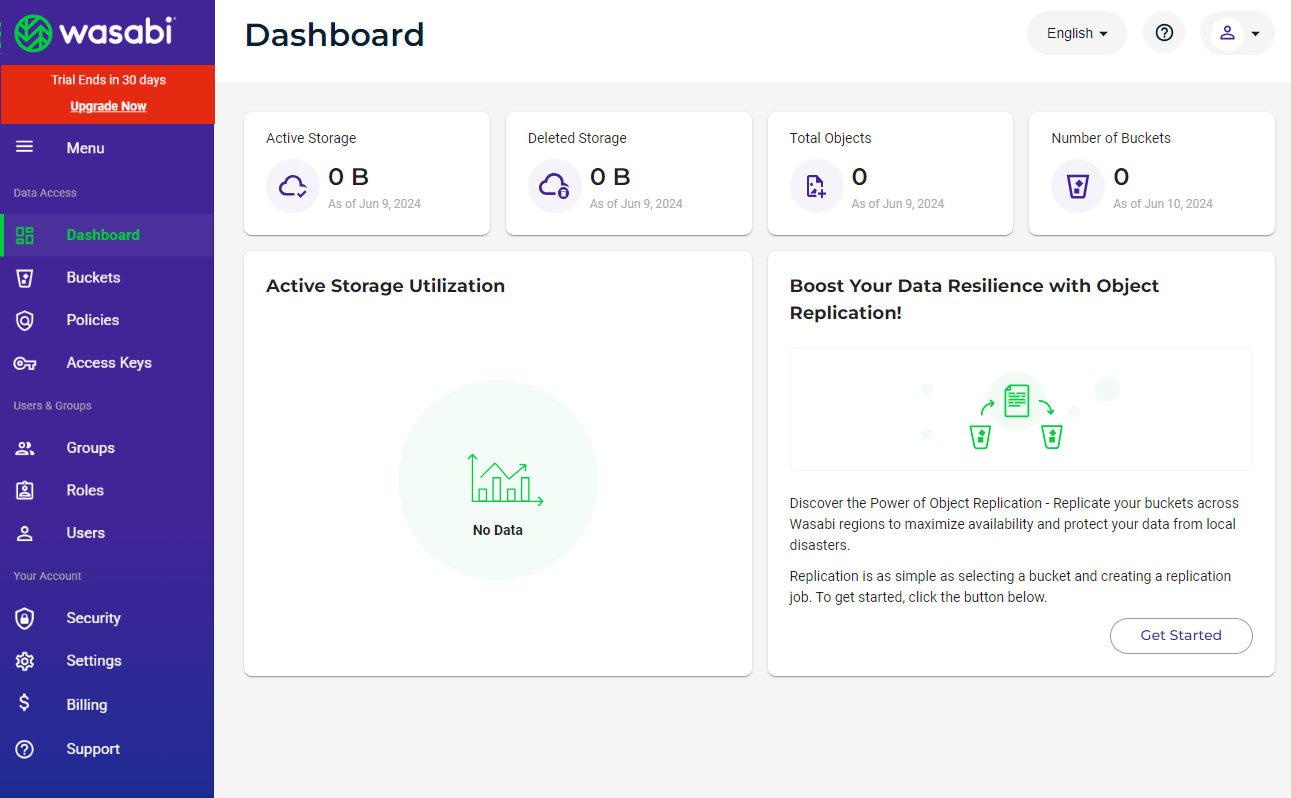
Wasabi offers cloud-based object storage designed to support AI pipelines from data ingestion to long-term model retention. Built to handle both structured and unstructured datasets at scale, Wasabi enables organizations to store, access, and archive massive AI data volumes efficiently. Its S3-compatible platform integrates easily with existing AI/ML tools and cloud ecosystems.
Key features include:

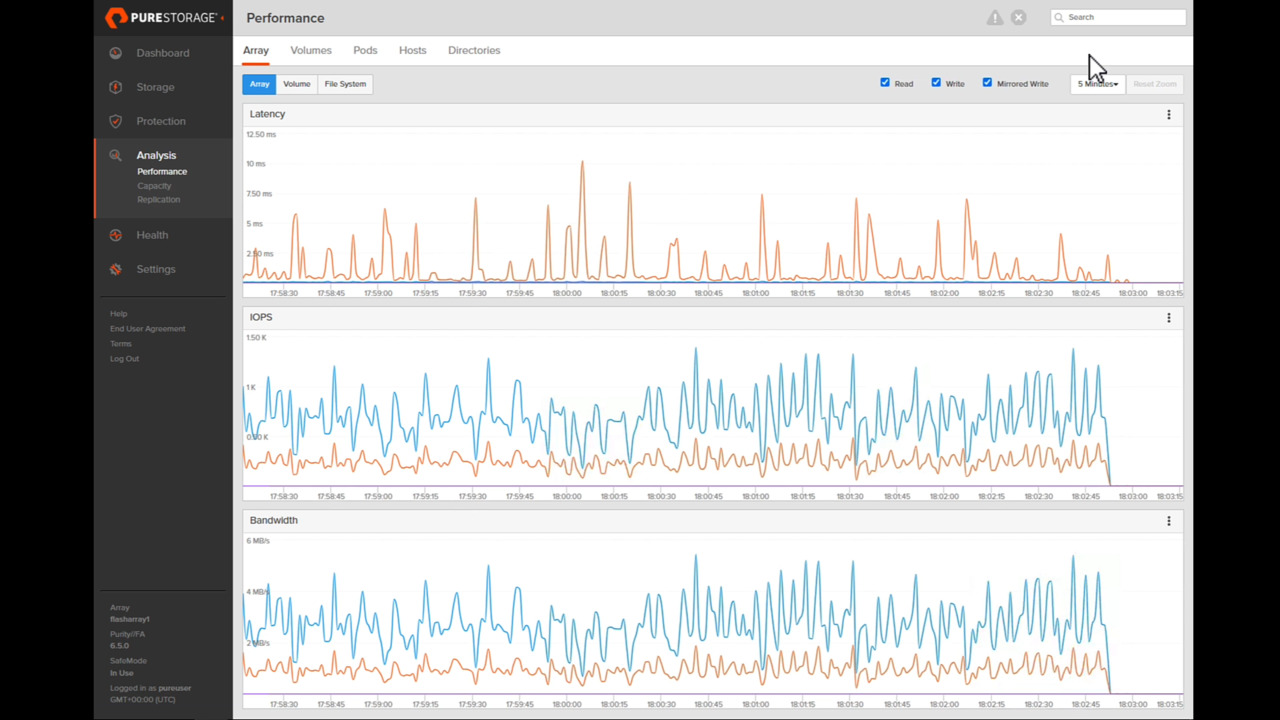
Pure Storage provides a unified data platform to support the speed, scale, and complexity of AI workloads. Its AI-ready infrastructure eliminates data bottlenecks across the pipeline, from data preparation to training, fine-tuning, and inference, while maintaining consistent performance and availability. It is supported by FlashBlade//EXA and FlashBlade//S.
Key features include:
Related content: Read our guide to AI storage providers
Long-term AI data retention systems are essential for sustaining model accuracy, regulatory compliance, and operational resilience as data volumes continue to expand. By combining scalable object-based architectures, cost-efficient cold tiers, durable media, and strong immutability controls, organizations can preserve critical datasets without incurring unnecessary performance costs. A well-designed retention strategy balances accessibility with affordability, ensuring historical data remains available for retraining, audits, and reproducibility.
See Cloudian first in Google Search

