


Request a Demo
Join a 30 minute demo with a Cloudian expert.
Edge AI solutions bring artificial intelligence capabilities directly to local hardware devices rather than relying exclusively on centralized cloud systems. This approach means data processing, decision-making, and inference happen at or near the data source, such as industrial sensors, cameras, or IoT endpoints.
By shifting AI computation to the “edge,” organizations can reduce latency, decrease bandwidth consumption, and improve privacy by limiting the need to transmit raw data to distant servers. Edge AI is critical for applications requiring real-time responses and low-latency operation, such as autonomous vehicles, manufacturing automation, and smart surveillance.
These solutions typically involve the integration of compact AI models, efficient run-time environments, robust edge hardware, and device management systems. The result is a more agile, responsive AI capable of operating reliably and securely in environments where cloud connectivity may be unreliable or insufficient for split-second decision-making.
This is part of a series of articles about AI infrastructure.
In this article:
Edge hardware encompasses the physical devices responsible for executing AI models at the data source. Common examples include single-board computers, specialized AI accelerators, FPGAs, and SoCs (system-on-chip) outfitted with dedicated neural processing units (NPUs) or GPUs.
These components provide the computational horsepower necessary for running AI inference tasks locally, balancing size, power consumption, and processing capability based on the edge application. The selection of edge hardware directly impacts the performance, usability, and deployment flexibility of an AI edge solution.
Related content: Read this guide on Edge AI hardware.
Edge storage deals with how data is retained and managed on edge devices. Given that edge environments often have limited or intermittent connection to the cloud, having reliable local storage is vital for collecting sensor data, storing intermediate AI results, and supporting software updates.
Storage solutions range from embedded flash storage on microcontrollers, to SSDs or localized storage clusters for high-throughput applications. Efficient edge storage must balance scalability, durability, and read/write performance. For AI workloads, rapid data access is crucial for real-time inference and analytics.
Related content: Read these guides on AI at the edge and AI storage.
Device firmware and operating system (OS) form the foundational software stack that powers up and manages edge hardware. The firmware initializes the hardware, manages low-level system resources, and ensures reliable boot cycles.
The OS, whether it’s a lightweight Linux distribution, a real-time OS, or a custom embedded platform, allocates computing resources among AI workloads, ensures process isolation, and provides a secure environment for application execution.
A suitable firmware/OS combination is essential for efficient device management, secure provisioning, and patching. It typically includes support for device drivers, file systems, and interfaces for seamless integration with AI frameworks. Many edge devices use containerization or virtualization to further isolate different components and simplify application updates.
The AI model and runtime environment are the heart of any edge AI solution. AI models, whether for vision, audio analysis, or predictive maintenance, must be optimized in both size and computational complexity to run efficiently on constrained edge hardware. This often requires pruning, quantization, or conversion to lighter architectures so that inference can happen quickly and within power or memory limits.
Runtime environments (such as TensorFlow Lite, or ONNX Runtime) provide the optimized execution layer that interfaces with system hardware acceleration. The runtime ensures that inference executes as efficiently as possible, utilizing specialized hardware features where available.
As edge deployments scale to dozens, hundreds, or thousands of devices, centralized management becomes critical to maintain reliability, performance, and security. Orchestration tools automate software rollouts, schedule jobs, troubleshoot issues, and offer insights into fleet health and operational metrics.
Integration with existing enterprise systems, fine-grained access control, and efficient over-the-air (OTA) update capabilities are essential features. Orchestration layers often provide container or microservice runtime support to enable modularity and simplify scaling new AI applications.

Jon Toor, CMO
With over 20 years of storage industry experience in a variety of companies including Xsigo Systems and OnStor, and with an MBA in Mechanical Engineering, Jon Toor is an expert and innovator in the ever growing storage space.
Make the edge storage layout “crash-resilient by design”: Separate write-heavy telemetry buffers from read-mostly model/artifact partitions, and use journaling + atomic renames for anything the runtime must load at boot. Many edge “AI bugs” are really torn writes after brownouts.
Treat model updates like firmware, not like app releases: Use A/B (dual-bank) model slots with signed manifests and a health gate (latency/accuracy sanity checks) before flipping traffic. It prevents bricking a fleet with one bad export or incompatible runtime op.
Use ring buffers with cryptographic sealing for sensor evidence: For cameras/industrial sensors, keep a rolling local buffer (minutes–hours) and “seal” segments with hashes + time anchors when an event triggers. You get forensic integrity without storing everything forever.
Push feature extraction to the edge, but keep “raw escape hatches”: Default to storing compact features/embeddings locally to save space, yet retain a short raw-data window for retraining and dispute resolution. The teams that only keep features regret it the first time a model misclassifies and they can’t re-label.
Build a “golden config” that includes storage wear policies: Flash dies early under AI-style write patterns. Enforce log compaction, write coalescing, and SMART/health thresholds with proactive swap-out rules. Track TBW/PE cycles as a first-class fleet metric.

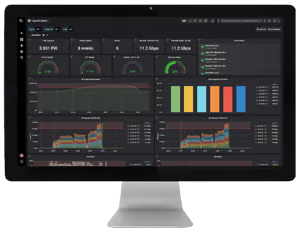
Cloudian HyperStore is a highly scalable, S3-compatible object storage platform engineered to bring enterprise-grade data management directly to the edge. For AI solutions operating outside the core data center, Cloudian functions as a localized AI data lake, efficiently ingesting massive streams of unstructured data—such as high-resolution video, IoT telemetry, and industrial sensor outputs. By providing high-throughput local storage, Cloudian supports advanced edge AI architectures, including localized Retrieval-Augmented Generation (RAG) pipelines and vector database integration, ensuring that confidential data remains sovereign and secure behind the local firewall without needing to traverse external networks.
Key features include:

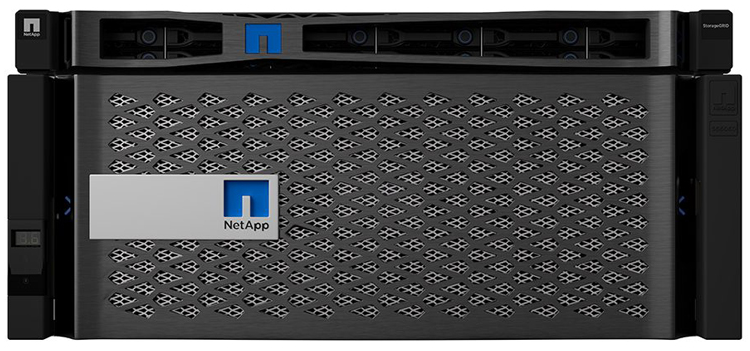
NetApp StorageGRID is a scalable object storage platform to manage large volumes of unstructured data across distributed and hybrid environments. It supports AI data pipelines by enabling high-throughput data access and efficient handling of large datasets used in training and inference workflows. The platform integrates with S3-compatible applications and provides policy-driven data lifecycle management.
Key features include:

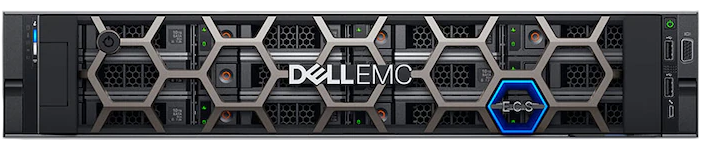
Dell Elastic Cloud Storage (ECS) is an object storage platform that provides cloud-scale storage within on-premises or edge environments. It handles large volumes of unstructured data while reducing dependency on public cloud storage. ECS supports analytics, IoT, and AI workloads by offering scalable storage with consistent access and integrated data protection features.
Key features include:

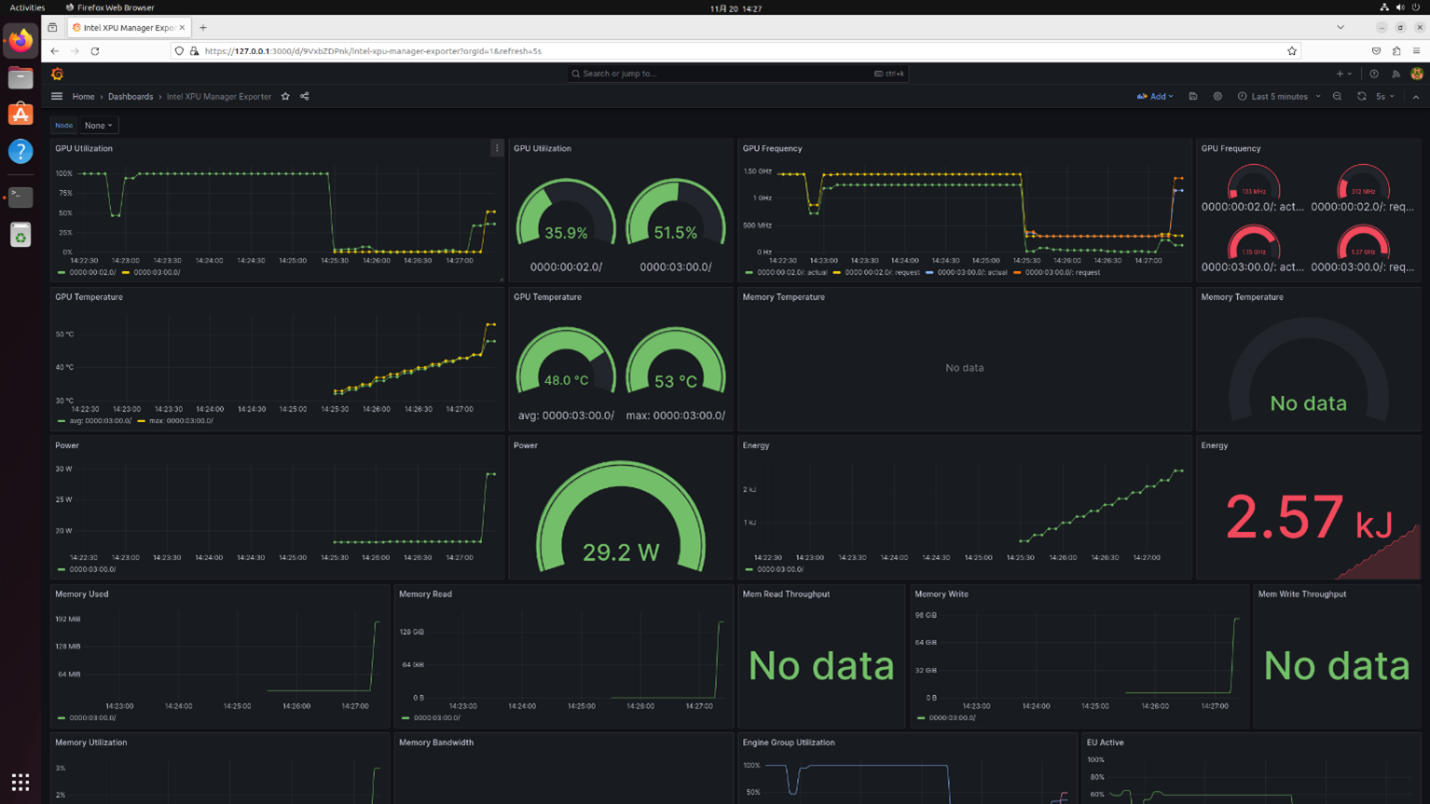
Intel AI Edge Systems are pre-configured, benchmarked platforms developed in collaboration with Intel’s partner ecosystem to accelerate deployment of scalable, secure edge AI solutions. These systems combine Intel’s processors and accelerators with open-source software stacks optimized edge workloads like video analytics, industrial automation, and AI inference.
Key features include:

AWS for the Edge brings the capabilities of the cloud closer to where data is generated, enabling low latency, local data processing, and secure edge deployments across environments. Suitable for industrial sites, metro locations, 5G networks, or rugged environments, AWS extends its infrastructure, services, APIs, and tools beyond traditional data centers.
Key features include:
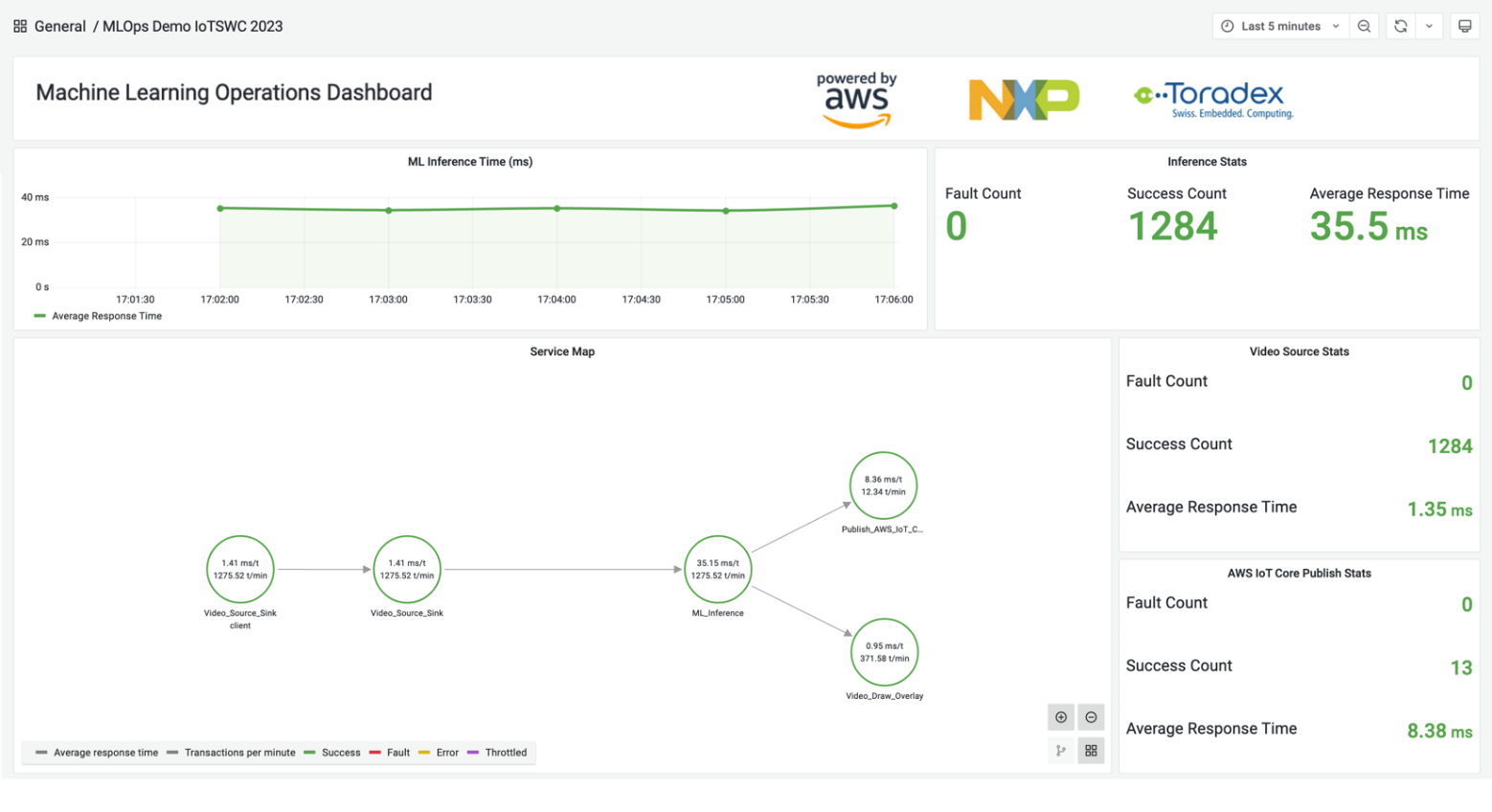
MediaPipe is a framework that provides ready-to-use AI and machine learning solutions for building cross-platform applications. It offers a suite of pre-trained models, APIs, and developer tools to help integrate vision, text, and audio intelligence into mobile, web, and desktop environments.
Key features include:

ClearBlade is a full-stack edge AI and IoT platform that delivers intelligence and automation at the data source. It allows enterprises to deploy and manage AI models, edge devices, and applications without reliance on constant cloud connectivity. It supports diverse hardware architectures and industrial protocols, enabling predictive analytics and continuous operations.
Key features include:
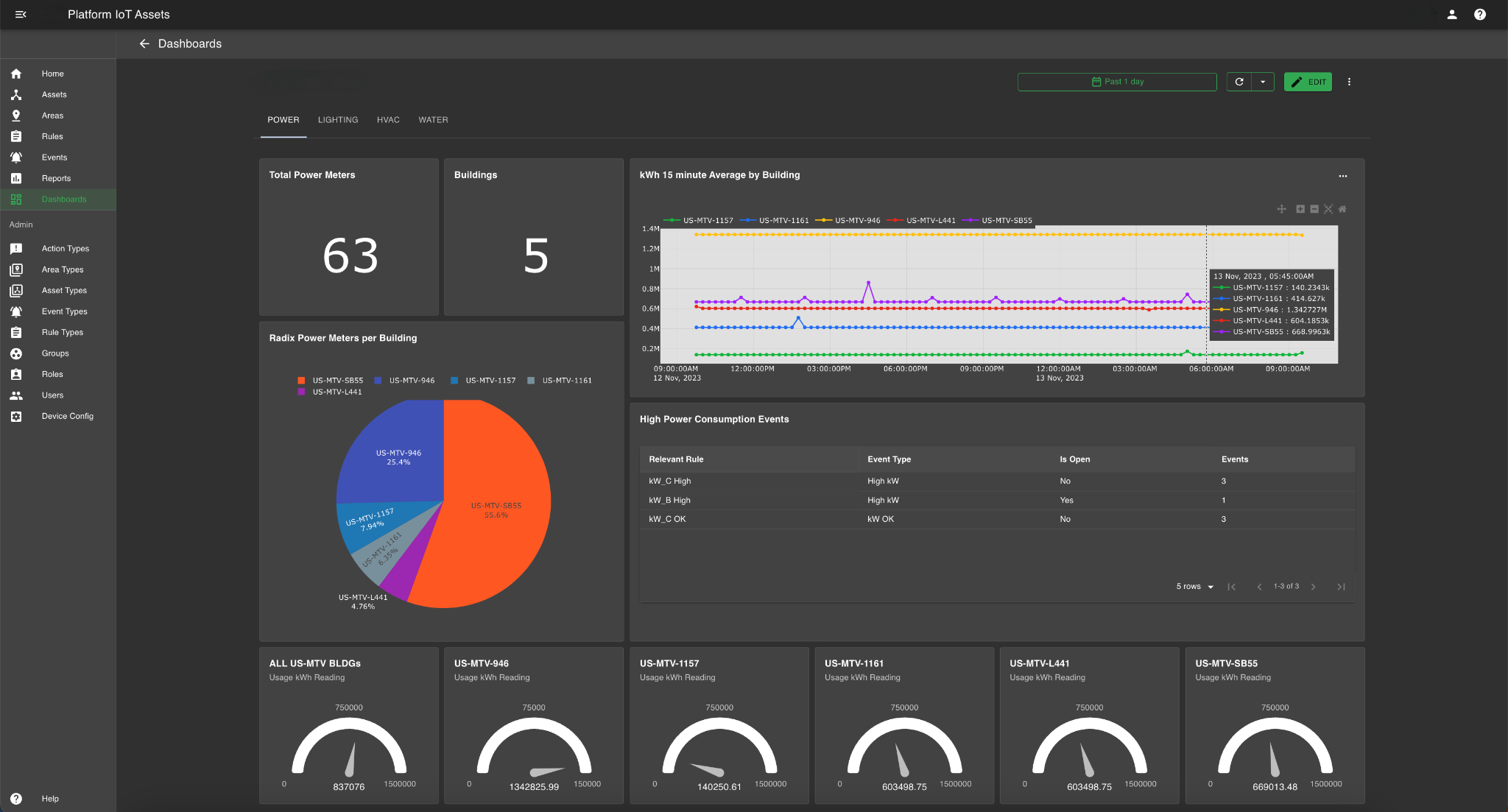

Edge Impulse is an edge AI platform that enables machine learning teams to develop, deploy, and optimize AI models on edge devices, ranging from microcontrollers to industrial systems. It supports the full ML workflow, including data collection, preprocessing, model training, profiling, and deployment.
Key features include:
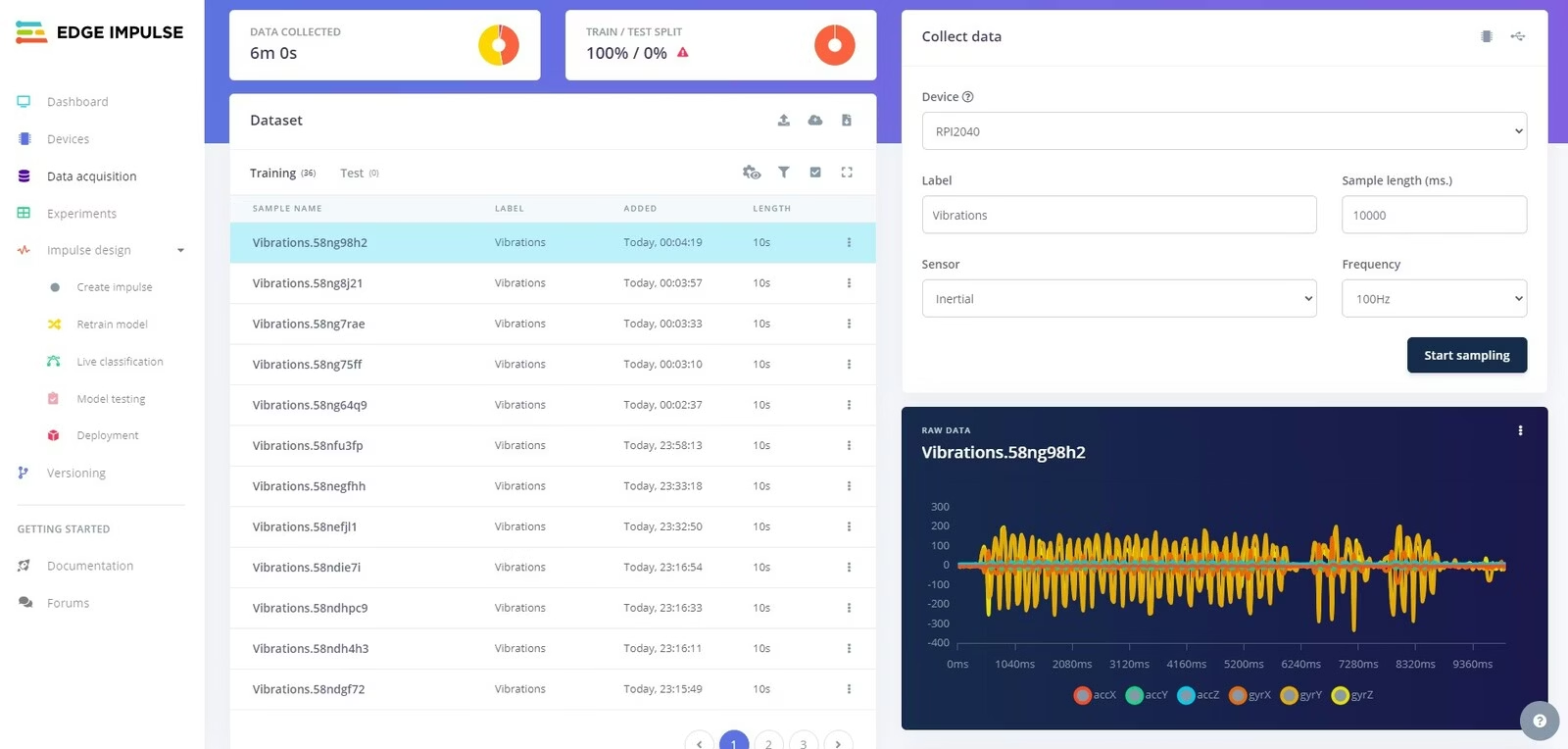
Latent AI’s Efficient Inference Platform (LEIP) is a modular edge AI toolchain that simplifies the machine learning lifecycle while optimizing for performance, size, and energy efficiency. Intended to support developers of varying skill levels, LEIP enables secure, repeatable AI development across diverse edge hardware.
Key features include:
Here are some important practices to keep in mind when setting up an edge AI solution.
Edge AI systems must efficiently manage data storage as local data volumes can grow quickly, especially in real-time analytics or multimedia scenarios. Leveraging storage solutions that offer dynamic scalability and high-throughput access is essential. Look for edge file systems or embedded storage platforms that support advanced analytics, seamless integration with AI model runtimes, and prioritization for hot data needed by inference engines.
Implement mechanisms for data retention and aging, ensuring the most relevant or recent information is available for immediate processing. Techniques such as ring buffering or hierarchical storage (where data is gradually offloaded to the cloud or archived) can keep the edge device responsive while preventing storage exhaustion.
Edge environments often suffer from unreliable connections to the cloud, which makes local autonomy vital. Systems should be able to perform core functions, including inference, actuation, and minimal decision making, regardless of network status. Building in local queuing and caching strategies allows for batching data and synchronizing with the central system when connectivity is restored, maintaining operational continuity.
To further minimize dependence on connectivity, design devices to dynamically adapt their AI workloads based on available resources and bandwidth. Asynchronous updates, local failover behaviors, and robust retry policies ensure the system can provide uninterrupted service.
AI models intended for edge deployment need significant optimization to fit reduced computational, memory, and power budgets. Start by selecting or designing lightweight architectures, then apply techniques such as quantization, pruning, and knowledge distillation. These optimizations can minimize inference latency, reduce memory footprint, and decrease energy consumption.
Test the effects of each change on both local accuracy and real-time performance, using representative datasets from deployment environments. Consider using hardware-specific acceleration libraries provided by chip vendors to maximize throughput. Document optimal configurations for easy redeployment, and build pipelines to automate much of the conversion and tuning process for faster iteration.
Edge AI devices often operate unsupervised for extended periods, so the ability to deliver secure updates is vital for addressing vulnerabilities, model drift, and evolving functionality. Over-the-air (OTA) update systems must support cryptographic verification, rollback capabilities, and minimal disruption to active workloads.
Making firmware, OS, and AI model updates modular increases flexibility and keeps operational risk low when patching. Projecting for long device lifecycles also means designing with modular software and hardware interfaces so devices can adopt future standards or integrate improved models without physical replacement.
Testing in controlled labs alone is not sufficient; real-world edge environments often introduce variability in connectivity, power, latency, or thermal conditions. Incorporate edge-specific validation protocols, running thorough end-to-end tests using representative workloads and environmental factors.
Monitor inference throughput, data integrity, and latency to catch issues not evident in ideal settings. Iterate on model tuning and system configuration based on field test feedback. Collect meaningful telemetry for post-deployment analytics and automated alerts when performance degrades or anomalies appear.

