


Request a Demo
Join a 30 minute demo with a Cloudian expert.
TL;DR:Storage bottlenecks stall AI when data can’t feed GPUs fast enough. AI storage solutions solve this: Cloudian HyperStore for on-prem S3 object storage, VAST Data and WEKA for high-performance data platforms, and Pure Storage FlashBlade for unified flash.
Storage bottlenecks in AI environments happen when data moves too slowly from your hard drives to the processors. This wastes expensive GPU power. To fix this, use high-speed NVMe SSDs, set up a unified data planeto stop data silos, and use direct-to-processor data transfer protocols.
Storage strategies to avoid bottlenecks:
This is part of a series of articles about AI infrastructure
In this article:
The table below compares AI storage solutions that can help overcome storage bottlenecks. We explore each of them in more detail in the sections that follow.
| Category | Solution | Best For | Key Strengths | Things to Consider |
| Object Storage Platforms for AI | Cloudian HyperStore | On-prem S3 object storage for data-centric AI | Native S3, GPUDirect, exabyte scale, strong security | Monitoring dashboard and some cloud integrations maturing |
| Object Storage Platforms for AI | MinIO AIStor | S3-compatible object storage for AI at scale | Software-defined, exabyte namespace, rich S3 API, low TCO | Monitoring and documentation depth vary in production |
| Object Storage Platforms for AI | Scality RING | Flash and hybrid object storage across the AI pipeline | Microsecond small-object latency, multi-scale, CORE5 | Steeper learning curve, management UI still maturing |
| High-Performance Data Platforms | VAST Data Platform | Unified all-flash data platform for the AI pipeline | DASE architecture, file/object/block/table, flash scale | Write throughput and documentation cited by users |
| High-Performance Data Platforms | WEKA NeuralMesh | Software-defined parallel storage for AI training and inference | Microsecond latency, memory-to-flash pool, deploy anywhere | Newer vendor and flash-tier economics vs capacity stores |
| High-Performance Data Platforms | DDN Infinia | Unified AI data platform for inference, analytics, training | Sub-ms latency, metadata engine, multi-tenancy, dense | Premium cost and upgrade process noted by users |
| High-Performance Data Platforms | Pure Storage FlashBlade | Unified all-flash file and object storage for AI | Native NFS/SMB/S3, non-disruptive upgrades, EXA scale | Premium pricing, cloud integration, and support cited |
| High-Performance Data Platforms | IBM Storage Scale | Parallel file system and global data platform for AI, HPC | Massively parallel FS, content-aware NLP, file+object anywhere | Complex licensing and setup reported by users |
Modern AI workloads rely heavily on GPUs for parallel processing, but GPUs require a constant and high-speed flow of data to remain fully utilized. When storage systems cannot supply data at the required rate, GPUs spend significant time waiting for input, leading to underutilization. This inefficiency not only delays project timelines but also wastes investment in high-performance hardware. Effective storage solutions must be able to match or exceed the data throughput demanded by multi-GPU clusters to avoid these pitfalls.
Moreover, as AI models become larger and more data-hungry, the gap between compute capabilities and storage performance widens. Organizations that fail to upgrade their storage infrastructure face diminishing returns on their GPU investments. The end result is a scenario where the theoretical performance of the AI environment is never fully realized because storage remains the weakest link in the chain.
AI pipelines encompass multiple stages, including data ingestion, preprocessing, training, validation, and inference. Each of these stages involves large data transfers between storage and compute nodes. If the storage layer cannot deliver data at the pace required by each stage, the entire pipeline suffers from increased latency and reduced throughput. Slow data movement can stall experiments, prolong model development cycles, and delay deployment into production.
In distributed AI environments, the need for fast data movement becomes even more critical. With multiple nodes working in parallel, any lag in storage access is amplified across the system. This not only affects performance but can also introduce inconsistency or synchronization challenges. Ensuring that storage can keep pace with the needs of distributed compute resources is essential for maintaining efficient, scalable, and reliable AI operations.
AI environments are characterized by exponential data growth, driven by larger datasets, more complex models, and continuous data collection. This growth puts increasing pressure on storage systems, which must scale in both capacity and performance. If storage infrastructure is not designed to handle this expansion, bottlenecks become more frequent and severe, eventually hampering the ability to experiment with or deploy new AI models.
Over time, legacy storage solutions may become overwhelmed by the cumulative effect of data growth. As more data accumulates, the time required for loading, preprocessing, and model checkpointing also increases. Without proactive scaling and optimization, what starts as a minor delay can escalate into a significant operational issue, making it critical to plan storage with long-term data growth in mind.
Centralized file systems are often used for simplicity and manageability but can become a major bottleneck in AI environments. These systems typically have a single point of control and limited bandwidth, which restricts the number of simultaneous read/write operations. As more compute nodes access the storage, contention increases and performance drops. This bottleneck is especially pronounced during large-scale distributed training, where multiple GPUs or nodes require concurrent access to massive datasets.
Additionally, centralized file systems may not be designed to handle the small, random I/O patterns common in AI workloads. The result is increased latency and reduced throughput as the storage system struggles to keep up with demand. Scaling up such systems usually requires costly hardware upgrades or complex re-architecting, which can disrupt ongoing projects and introduce operational risks.
Inference workloads, especially in real-time applications, are highly sensitive to storage latency. High latency in retrieving data or models from storage can lead to unacceptable response times, affecting user experience or the effectiveness of automated systems. This is particularly problematic when inference must process large volumes of data or access multiple models stored across different storage tiers.
Latency issues can also arise from network congestion, inefficient storage protocols, or suboptimal data placement strategies. As AI deployments grow, these factors can compound, leading to intermittent or persistent slowdowns. Addressing high latency requires a combination of fast storage hardware, optimized data access paths, and intelligent data management strategies to ensure prompt retrieval and inference.
In modern AI environments, data is often distributed across cloud services, edge devices, and on-premises infrastructure. This fragmentation creates data silos, where datasets are isolated and difficult to access efficiently. Moving data between these silos incurs additional latency, bandwidth costs, and potential security risks, making it harder to maintain consistent performance across the AI pipeline.
These silos also complicate data management, as different environments may use incompatible storage formats or access protocols. This leads to duplicated data, versioning issues, and increased administrative overhead. Breaking down these silos through unified storage platforms or seamless data integration is essential for minimizing bottlenecks and supporting agile, scalable AI operations.
Checkpointing—periodically saving the state of a model during training—is a critical process for long-running AI jobs. Slow checkpointing can significantly increase total training time, as compute resources must pause while model states are written to storage. This is especially problematic with large models, where checkpoints can be several gigabytes or even terabytes in size.
Model versioning, which involves storing and managing multiple iterations of models, also places heavy demands on storage systems. Inefficient storage solutions can slow down versioning operations, hinder rollback or audit processes, and complicate collaboration among teams. To avoid these bottlenecks, storage infrastructure must support high-throughput, low-latency writes and efficient management of large files and metadata.
The first step in building a storage system for AI is accurately calculating the bandwidth required to keep your compute resources fully utilized. This involves understanding the data throughput needed for each stage of your AI pipeline, including training, inference, and data preprocessing. By analyzing your workload patterns, dataset sizes, and the number of concurrent jobs, you can estimate the minimum bandwidth your storage solution must provide.
Neglecting this calculation often leads to under-provisioned storage, resulting in bottlenecks that compromise performance and resource utilization. Regularly revisiting these calculations is also important as workloads and datasets evolve. Proactive bandwidth planning ensures your infrastructure remains aligned with the demands of your AI environment, minimizing downtime and maximizing return on investment.
Large-scale AI training jobs can involve thousands of GPUs and petabytes of data, demanding extremely high throughput from storage systems. To keep training processes running efficiently, storage must deliver data at a rate that matches or exceeds the aggregate bandwidth of all participating compute nodes. Failure to do so leads to data starvation, where GPUs remain idle while waiting for input, drastically reducing overall efficiency.
High throughput is typically achieved by leveraging parallel file systems, distributed storage architectures, or advanced caching strategies. It is also important to optimize both hardware and software layers, ensuring that network interfaces, storage controllers, and data paths are not limiting factors. Investing in high-throughput storage is essential for organizations aiming to scale up their AI operations without performance bottlenecks.
AI workloads increasingly rely on unstructured data, such as images, videos, and sensor logs, which can quickly scale into petabytes. Storage systems must therefore offer massive scalability, both in terms of capacity and performance, to accommodate growing datasets without sacrificing speed. Traditional storage solutions often struggle to scale efficiently, leading to fragmentation, high management overhead, or performance degradation as data volumes increase.
Modern storage platforms designed for unstructured data typically use object storage architectures, which allow for virtually unlimited scalability and efficient management of large, diverse datasets. These systems can distribute data across multiple nodes or locations, balancing load and ensuring consistent performance. Scalability also extends to metadata management, enabling fast search and retrieval even as datasets grow in size and complexity.
Metadata plays a critical role in AI environments, enabling fast search, retrieval, and management of datasets and models. Storage systems with robust metadata support can accelerate data discovery and streamline pipeline automation, which is essential for scaling AI operations. Effective metadata handling allows teams to track data provenance, manage access controls, and ensure version consistency across large, collaborative projects.
Weak metadata support can lead to bottlenecks when searching for specific files, tracking model versions, or orchestrating complex workflows. Advanced storage solutions often provide rich metadata APIs, indexing, and tagging capabilities to meet the demands of AI workloads. Investing in strong metadata support not only improves performance but also simplifies compliance and governance for sensitive or regulated data.
All-flash NVMe arrays provide the low latency and high throughput needed for modern AI workloads. Unlike traditional hard drives or SATA-based SSDs, NVMe devices communicate directly over the PCIe bus, reducing protocol overhead and increasing the number of parallel I/O operations. This allows storage to deliver data quickly enough to keep GPUs and CPUs busy during training and inference.
NVMe arrays are particularly valuable for workloads that repeatedly access large datasets, checkpoints, or model files. Faster read and write performance shortens data loading times, reduces checkpoint delays, and improves overall pipeline efficiency. While NVMe storage has a higher upfront cost, the increase in compute utilization often offsets that investment by reducing idle accelerator time.
Data should travel from storage to compute resources through the shortest and most efficient path possible. Every unnecessary network hop, protocol translation, or software layer adds latency and consumes CPU resources. Technologies such as GPUDirect Storage and RDMA help reduce this overhead by allowing data to move more directly between storage and GPUs or across the network.
Direct data paths become increasingly important in multi-node AI clusters, where large volumes of data move continuously between storage and compute systems. Optimizing the network fabric, minimizing protocol overhead, and eliminating unnecessary data copies help improve throughput and reduce latency. These improvements enable more predictable performance as AI workloads scale.
Not all AI data requires the same level of storage performance. Frequently accessed datasets, active training data, and current model checkpoints benefit from high-speed storage such as NVMe arrays, while older datasets, completed experiments, and archived models can be stored on lower-cost object storage or high-capacity disks. Storage tiering aligns performance with workload requirements while controlling infrastructure costs.
An effective tiering strategy relies on clear data lifecycle policies that automatically move data between performance and capacity tiers based on usage patterns. This reduces pressure on expensive high-performance storage without affecting active workloads. As datasets continue to grow, automated tiering helps maintain consistent performance while improving storage efficiency and scalability.
How we selected these solutions:We shortlisted AI storage solutions based on their ability to feed GPUs at high throughput and low latency, scale unstructured data to petabytes and beyond, and integrate with AI pipelines and frameworks.

Best for:On-prem, S3-compatible object storage for data-centric AI workloads
Strengths:Native S3 API, GPUDirect support, exabyte scale, and strong security
Things to consider:Monitoring dashboard and some cloud integrations still maturing
Cloudian HyperStore is an S3-compatible object storage platform that runs on industry-standard hardware on-premises, consolidating unstructured data into a single scalable pool. It uses a shared-nothing, peer-to-peer architecture with no central controller or metadata server, so every node serves I/O and adds CPU, memory, network, and disk as the cluster grows.
The platform presents distributed infrastructure as a single flat S3 namespace managed from one set of credentials and one control plane. It is available as software or as fully supported appliances, and the HyperScale AI Data Platform packages NVIDIA GPUs and AI Enterprise software with HyperStore storage in a single appliance.
Key features include:
Limitations (as reported by users on PeerSpot):


Best for:S3-compatible object storage for AI training and inference at scale
Strengths:Software-defined, exabyte single namespace, rich S3 API, and low TCO
Things to consider:Monitoring and documentation depth vary in production deployments
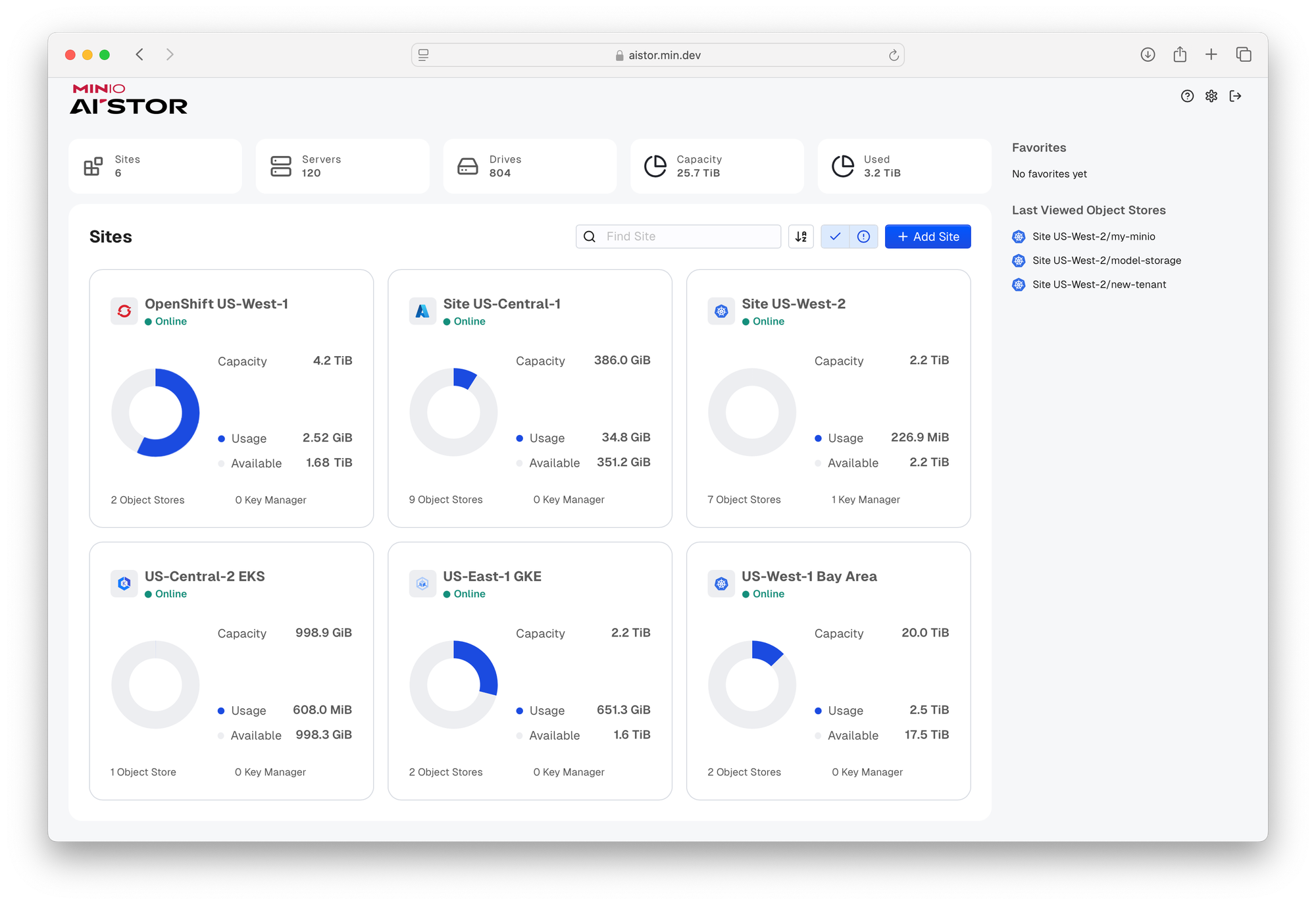
MinIO AIStor is a software-defined, S3-compatible object store built for AI and analytics workloads from petabyte to exabyte scale. It runs on-premises, at the edge, or in the cloud, and stores objects, tables, and files under a single flat namespace.
AIStor uses a stateless architecture that manages metadata within the storage layer through erasure coding rather than a separate metadata database. It connects to AI frameworks through the S3 API and AI-native interfaces, and includes data management, security, and observability tooling.
Key features include:
Limitations (as reported by users on G2):

Best for:Flash and hybrid object storage across the AI data pipeline
Strengths:Microsecond small-object latency, multi-dimensional scale, and CORE5
Things to consider:Steeper learning curve and a management UI still maturing
Scality RING is a software-defined, S3-compatible object storage platform, and RING XP is an all-flash configuration tuned for AI model training and fine-tuning. RING XP reaches microsecond response-time latencies for small (4KB) object data and scales out for large-object throughput beyond GB/sec.
It runs on AMD EPYC-based, all-NVMe storage servers and offers a streamlined object storage API alongside a full S3 implementation. RING serves the full AI data pipeline, from ingestion and preparation through training, checkpointing, and inference.
Key features include:
Limitations (as reported by users on PeerSpot):
Best for:Unified all-flash data platform serving the entire AI pipeline
Strengths:DASE architecture, file/object/block/table access, and exabyte flash scale
Things to consider:Write throughput and documentation cited by some users
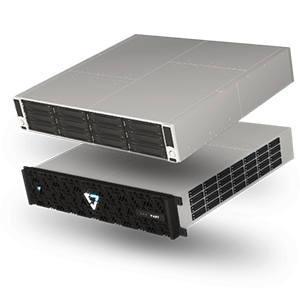
VAST Data provides a unified data platform, marketed as an AI Operating System, built on its Disaggregated Shared Everything (DASE) architecture. It combines storage, database, and compute services in one all-flash system that scales from terabytes to exabytes without separate tiers.
The VAST DataStore handles unstructured data with file and object access, and the platform adds database, data engine, and global namespace services. It is built to serve the AI pipeline across data capture, preparation, training, and serving.
Key features include:
Limitations (as reported by users on PeerSpot):

Best for:Software-defined parallel storage for AI training and inference
Strengths:Microsecond latency, memory-to-flash pool, and deploy-anywhere flexibility
Things to consider:Newer vendor and flash-tier economics versus capacity stores
WEKA’s NeuralMesh is a software-defined, container-native storage system built for AI and HPC workloads at any scale. It runs on standard x86 and ARM infrastructure across on-premises, cloud, and hybrid environments as a distributed parallel filesystem.
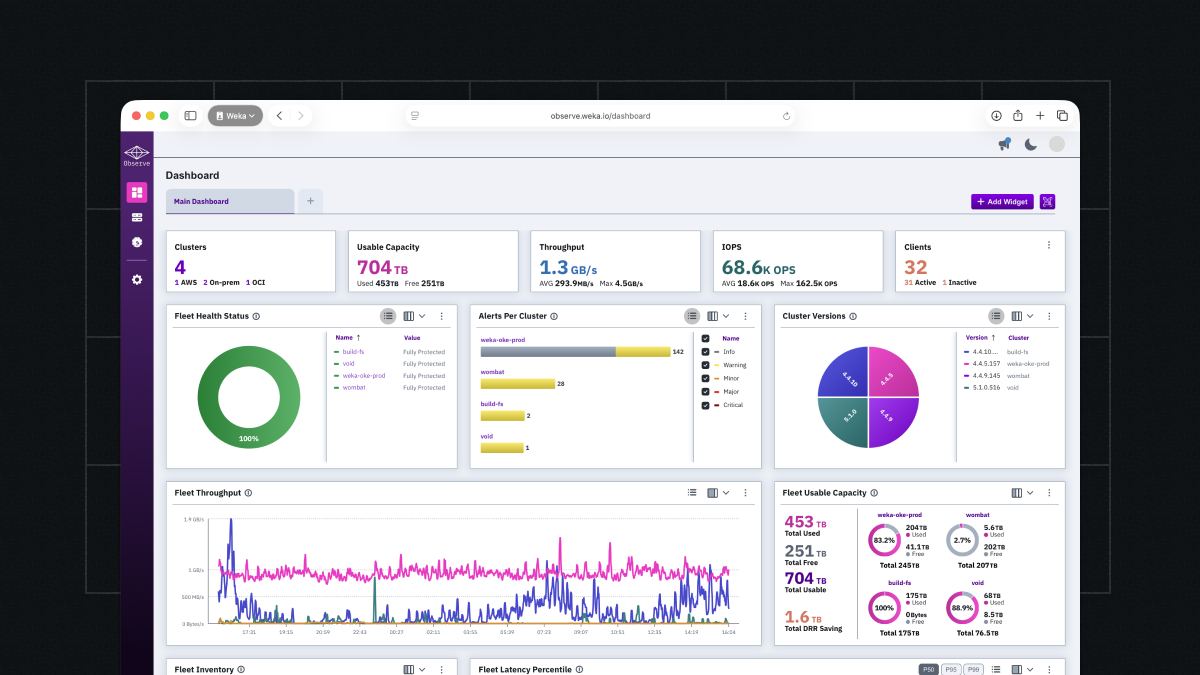
NeuralMesh organizes its capabilities into five components (Core, Accelerate, Deploy, Observe, and Enterprise Services) using a microservices design. It distributes data and metadata across the system and combines memory and flash into a single low-latency pool.
Key features include:
Limitations (based on publicly available sources):

Best for:Unified AI data platform for inference, analytics, and model preparation
Strengths:Sub-ms latency, metadata engine, multi-tenancy, and high density
Things to consider:Premium cost and upgrade process noted by users
DDN Infinia is a software-defined, high-performance AI data platform that unifies data across cloud, core, and edge. It provides object storage with native multi-protocol access and integrates AI inference, data analytics, model preparation, and model loading in one platform.
Infinia uses a containerized, microservice-based architecture and a metadata engine that supports tens of thousands of tags per object to reduce data movement. It is built in partnership with NVIDIA and connects to frameworks such as NeMo, NIM, Trino, and Spark.
Key features include:
Limitations (as reported by users on PeerSpot, for DDN’s storage line):

Best for:Unified all-flash file and object storage for AI and analytics
Strengths:Native NFS/SMB/S3, non-disruptive upgrades, and FlashBlade//EXA scale
Things to consider:Premium pricing, cloud integration, and support cited by users
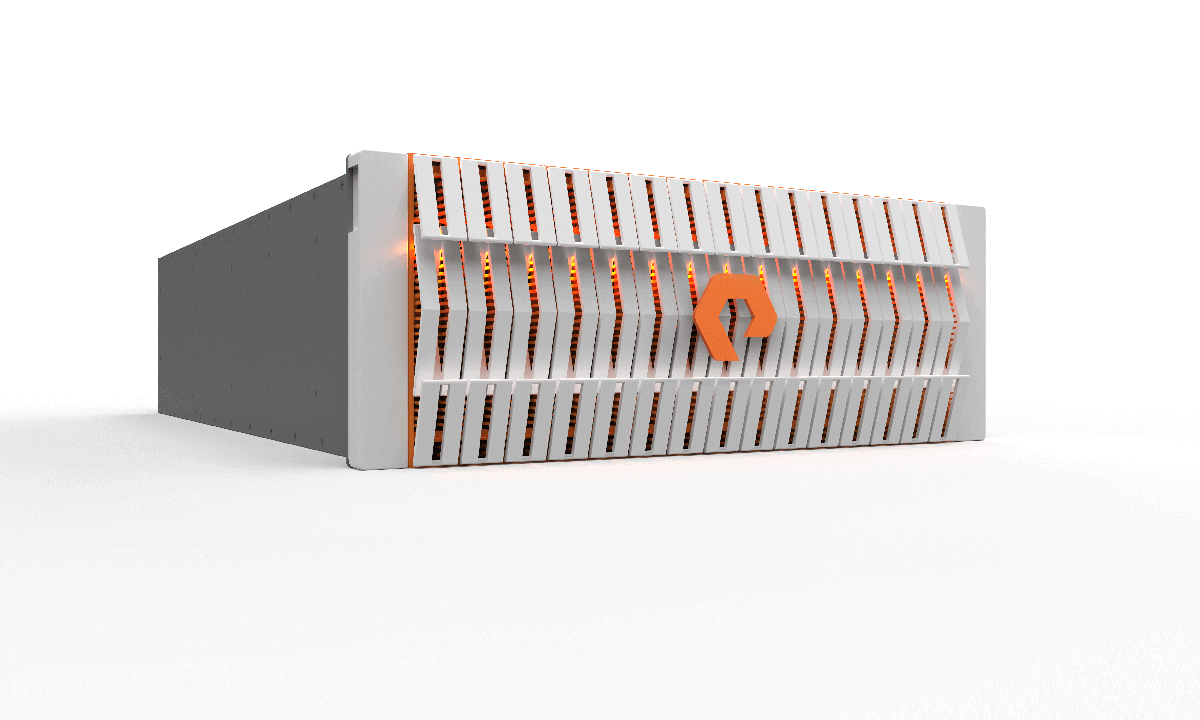
Pure Storage FlashBlade is a unified, all-flash file and object storage platform that runs native NFS, SMB, and S3 on a single operating system, Purity//FB, without gateways or protocol forks. It scales out as a modular system and treats files and objects equally in one solution.
The FlashBlade line spans FlashBlade//E for capacity-optimized workloads, FlashBlade//S for high-performance file and object, and FlashBlade//EXA for large-scale AI and HPC. It integrates with NVIDIA DGX SuperPOD, Apache Spark, and Splunk.
Key features include:
Limitations (as reported by users on PeerSpot):

Best for:Parallel file system and global data platform for AI and HPC
Strengths:Massively parallel file system, content-aware NLP, and file plus object anywhere
Things to consider:Complex licensing and setup reported by users
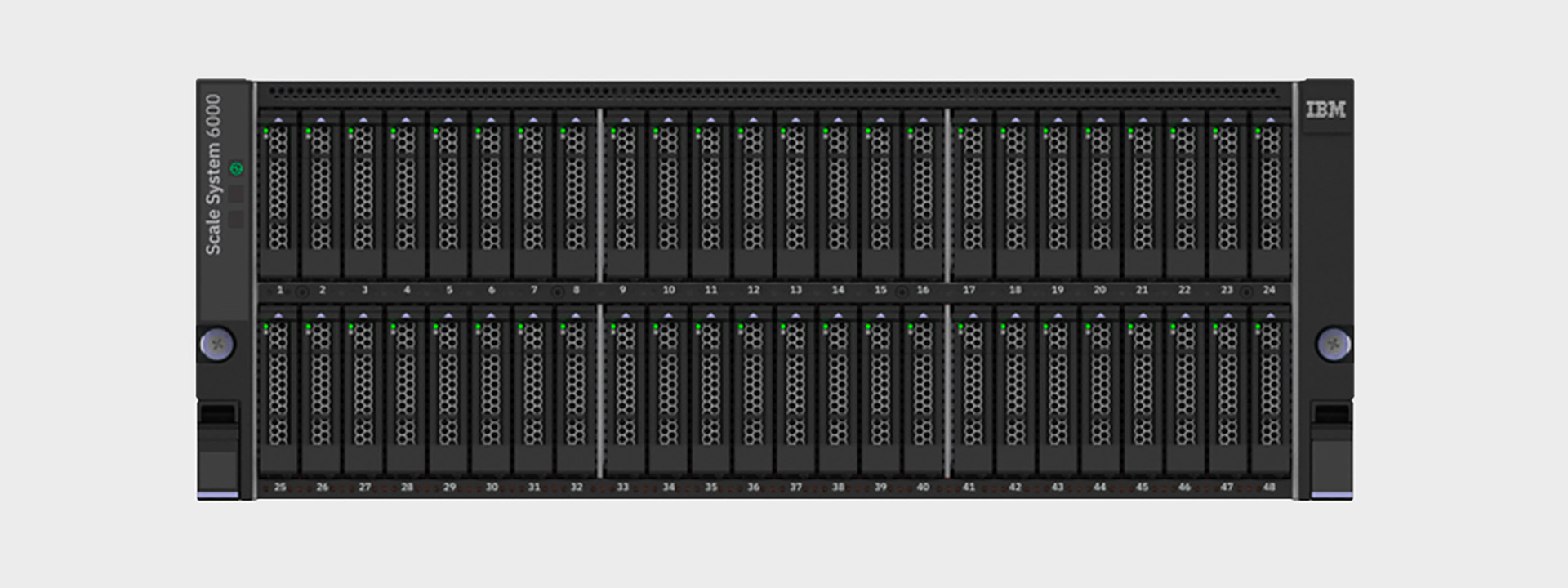
IBM Storage Scale is software-defined storage and a global data platform for AI, HPC, and analytics, built on a massively parallel file system. It delivers sustained high performance for model training, simulations, and large datasets, and provides secure file and object access across data centers, cloud, and edge in a single global platform.
Its content-aware capability uses natural language processing to analyze unstructured content as it is stored. It is available as software only or as the GPU-accelerated Scale System 6000 AI data platform.
Key features include:
Limitations (as reported by users on PeerSpot, formerly IBM Spectrum Scale):
Eliminating storage bottlenecks is essential for maintaining efficient AI pipelines and maximizing compute resource utilization. By implementing high-performance storage strategies like all-flash arrays and direct data paths, organizations can ensure seamless data delivery to GPUs. Proactive infrastructure planning and unified data management are vital steps to scale operations effectively and support long-term growth.
See Cloudian first in Google Search

